
Visible signs that a home needs exterior drainage include standing water on the lawn, foundation cracks, and efflorescence on basement walls. If you notice soil erosion, recurring basement leaks, or soggy patches of grass lasting more than 48 hours after rain, your property likely lacks a functional water management system.
Water is the primary cause of structural failure in residential foundations. Identifying these warning signs early allows you to intercept moisture before it compromises your home’s stability. A properly designed system doesn’t just move water; it manages the hydrostatic pressure that pushes against your basement or crawl space walls.
Primary Indicators of Drainage Failure
Your property provides clear physical cues when water isn’t moving correctly. During recent site visits near the West End and various historic neighborhoods in Richmond, VA, we’ve found that homeowners often mistake these structural warnings for simple “old house” quirks.
Common Visual Signs
- Gutter Overspill: If water cascades over the sides during light rain, the system is failing. This creates a concentrated “waterfall” that saturates the soil directly against your foundation.
- Basement Dampness: A heavy, musty odor indicates that vapor is wicking through the concrete. If walls feel “sweaty” or damp, you have an external moisture problem.
- Foundation Seepage: Watch the “cove joint,” the point where the floor meets the wall. Small trickles here and there after a storm prove that the water table is rising too high around your perimeter.
- Exterior Decay: Peeling paint or rotting siding near the ground level suggests that the soil is holding moisture against the house rather than shedding it.
Comparing Surface vs. Subsurface Issues
Not all drainage problems require the same fix. It is vital to distinguish between water sitting on top of the soil and water saturated deep beneath the surface when planning exterior drainage in Richmond.
| Feature | Surface Drainage Issues | Subsurface (Groundwater) Issues |
| Primary Symptom | Large puddles or “ponds” on the lawn. | Spongy soil that stays wet for days. |
| Building Impact | Siding rot and mulch washout. | Foundation shifting and wall bowing. |
| Common Fix | Swales or catch basins. | French drains or sump pump extensions. |
| Warning Sign | Water is flowing toward the house. | Heaving walkways or damp floor slabs. |
Surface issues are often about grading. However, subsurface issues are more insidious. We recently evaluated a property where the lawn looked dry, yet the basement was flooding; the high water table was the culprit, necessitating an exterior drainage in Richmond, VA, to relieve the underground pressure.
Step-by-Step Inspection Checklist
You can assess your property’s health with a simple walk-around. Perform this check after the next heavy rain to see how your land handles the load.
- The 10-Foot Rule: The ground should slope away from your foundation at a rate of at least 6 inches over the first 10 feet.
- Downspout Distance: Ensure downspouts discharge water at least 5 to 10 feet away from the home’s perimeter.
- The “Stuck Stake” Test: Push a wooden stake into a wet spot; if it slides in effortlessly days after a storm, the soil is dangerously saturated.
- Efflorescence Check: Look for a white, powdery substance on interior masonry walls. This is salt left behind by the evaporation of water and is a definitive sign of moisture migration.
Our Thorough Evaluation Process
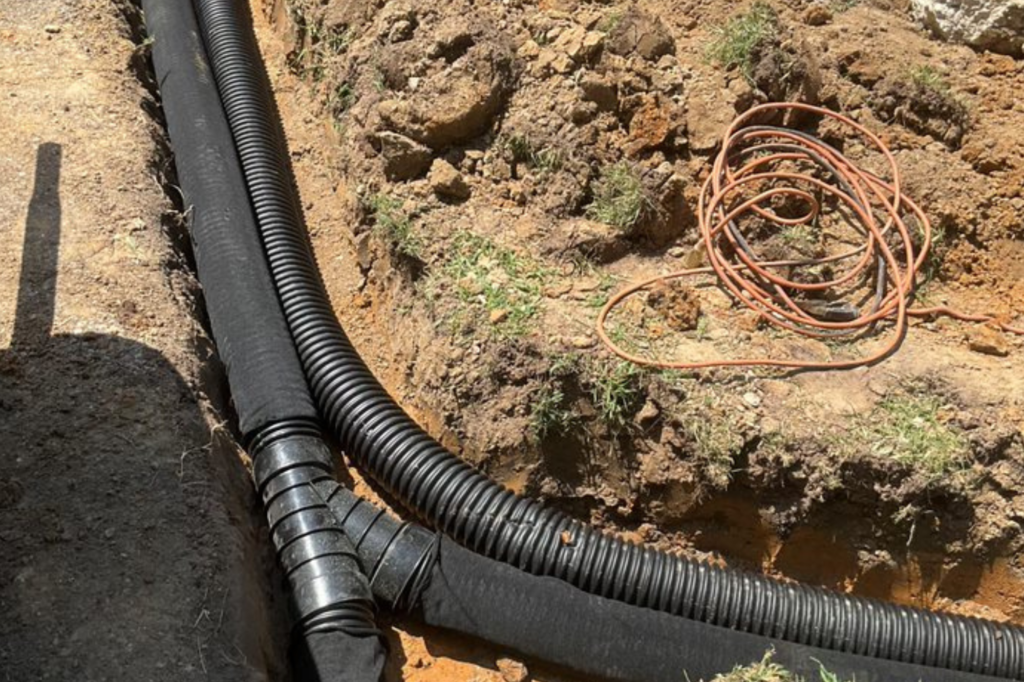
We don’t believe in “cookie-cutter” fixes because no two lots share the same topography. At Tiger C Construction LLC, every property is different and requires a thorough evaluation to determine exactly where a drainage solution is needed. Whether it is a solution involving French drains, channel trench drains, catch basins, regrading, or sump pumps, we will let you know why your property has water issues and how they need to be addressed to have a dry, usable yard again.
Our team analyzes the specific soil porosity and “infiltration vectors” of your land. For example, a home in a low-lying area might require a combination of catch basins for surface runoff and French drains for groundwater. By identifying the root cause, we ensure your investment remains protected with a Richmond, VA exterior drainage system designed for longevity.
Debunking the “Waterproof Paint” Myth
A common industry misconception is that applying “waterproof” sealant to the interior of a basement wall solves a drainage problem. This is a cosmetic fix for a structural issue. Water trapped behind a sealed wall creates immense pressure; eventually, that pressure will cause the coating to fail or, worse, cause the masonry to crack and bow. Effective drainage must happen on the exterior to stop water from ever reaching the foundation.
Secure Your Foundation with Tiger C Construction LLC
Don’t let poor drainage compromise the integrity of your home. We are committed to delivering exceptional craftsmanship and upholding honesty in every client interaction. Our goal is to ensure you feel confident that your project is in the hands of skilled professionals who genuinely care about the outcome.
What sets Tiger C Construction apart is our personalized approach to each project and our use of top-grade materials to provide durable, long-lasting results. We encourage you to reach out via phone or our website to discuss your construction needs and how we can bring your vision to life. Contact us today for a consultation or quote.
People Also Ask
- How long does a typical drainage installation take? Most residential projects are completed within 2 to 5 days, depending on the complexity and the equipment required.
- Will a French drain ruin my landscaping? While some excavation is necessary, professional installers can often restore the turf or integrate the drain into new hardscaping.
- Do I need a permit for yard drainage? In many areas, significant regrading or tying into the city’s storm sewers requires a permit to ensure that neighboring properties aren’t negatively impacted.