
If you suspect foundation damage, you must act immediately to prevent structural failure by performing a visual inspection for cracks and uneven surfaces. Next, you should consult a structural professional for an unbiased assessment rather than a repair contractor to ensure the diagnosis is based on safety rather than sales. Finally, address any underlying moisture issues and obtain multiple competitive quotes to secure a long-term, professionally engineered solution.
1. Immediate Steps for Assessment
Discovering a new crack in your drywall or noticing a door that suddenly sticks can be stressful. However, a systematic approach is essential. Before jumping to conclusions, perform a thorough “red flag” audit of your property to identify potential issues early.
Structural Warning Signs
- Interior Indicators: Look for “stair-step” cracks in drywall, especially above door frames. Note if the floors appear uneven or if the doors and windows no longer latch properly.
- Exterior Indicators: Walk the perimeter of your home. Note any horizontal cracks in the brickwork or gaps where the chimney seems to be pulling away from the siding. In neighborhoods like The Fan, where historic masonry is common, these gaps often indicate active structural movement.
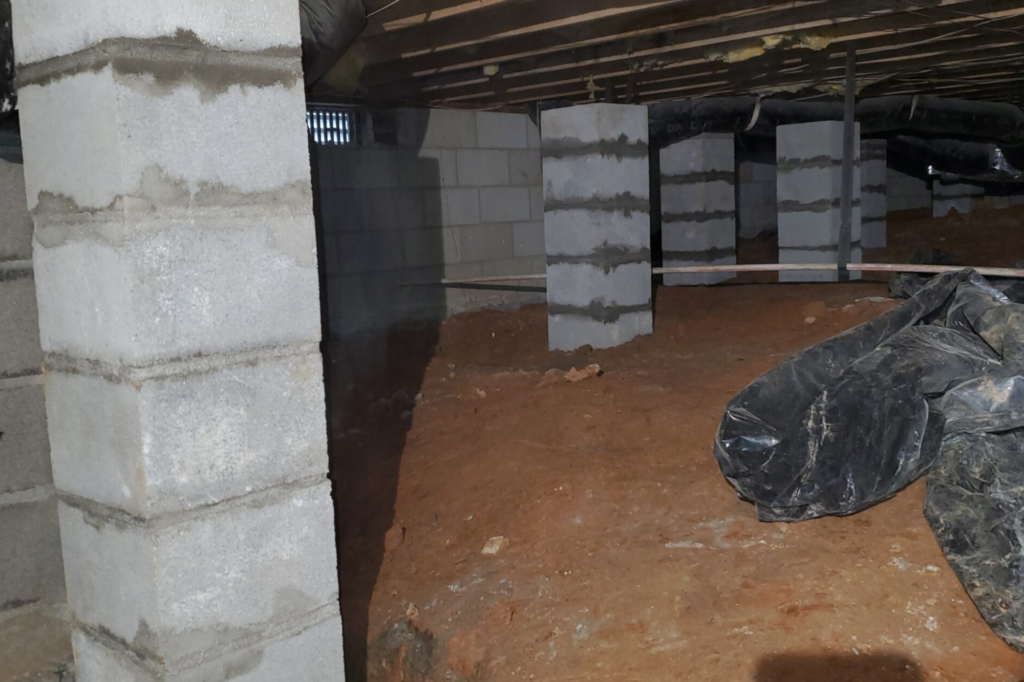
- The Crawlspace or Basement: This is the most critical area. Check for bowing walls or evidence of wood rot in the structural beams. During a recent audit for a client near Westover Hills, we found that identifying these signs early prevented a much more costly structural collapse. Experts in foundation repair in Richmond often note that early detection is the key to preventing total basement wall failure.
2. Professional Evaluation vs. Repair Quotes
The single biggest mistake homeowners make is calling a repair company for an inspection without understanding the difference between a salesperson and a structural expert. While many contractors provide honest estimates, their goal is to provide a specific repair solution. For an objective view, you may need a licensed Professional Engineer (P.E.).
Comparing Your Support Options
| Feature | Structural Professional | Foundation Repair Contractor |
| Primary Goal | Unbiased diagnosis and safety reporting | Diagnosing and performing repairs |
| Cost Structure | Flat consultation fee | Free estimates; profit from repair work |
| Conflict of Interest | None (They do not perform the repair) | High (They profit from the scope of work) |
| Deliverable | A stamped, legal engineering plan | A sales contract and repair estimate |
| Permit Support | Required for most structural permits | Usually handles the filing process |
When researching Richmond, VA, foundation repair, having an independent assessment is often the difference between a minor maintenance fix and a massive structural project involving heavy-duty stabilization supports.
3. The Sequential Action Plan
Once you have confirmed that your home is moving, follow this professional sequence to ensure the structural integrity of your home and protect your investment.
- Identify the Root Cause: Use a comprehensive inspection to determine if the issue is caused by soil type (such as the region’s expansive clay), weather conditions, or improper original construction.
- Mitigate Immediate Water Risks: Foundation movement is frequently a water management problem. Ensure gutters are clean and that water is being diverted away from the base of the home.
- Request Bids Based on Findings: Give every contractor the same scope of work. This prevents “apples-to-oranges” bidding where companies suggest wildly different quantities of stabilization supports. For homeowners seeking foundation repair in Richmond, VA, checking reviews for local expertise in clay-heavy soil is a vital step.
- Check Local Compliance: In areas like Church Hill, historical preservation or specific county codes may dictate how repairs must be executed. Always ensure your contractor is fully licensed and insured.
- Stabilize and Monitor: Use professional stabilization methods to support structures that are sagging or shifting. After the repair, monitor the area for several months to ensure the home has reached a new equilibrium.
4. Debunking the “More Piering is Better” Myth
A common industry misconception is that “over-engineering” a foundation with extra supports provides more safety. In reality, too much support can be as damaging as too little.
When a contractor installs an excessive number of piers, they risk creating “heave.” This occurs when the soil expands and pushes against the over-fortified section of the house, causing the floor to arch upward. This creates new, secondary tension cracks in parts of the home that were previously stable. A truly professional foundation repair in Richmond strategy focuses on precise placement, placing stabilization supports only in the specific locations needed to prevent further movement and protect the home’s “roots.”
5. Applying our Professional Stabilization Process to solve this
At Tiger C Construction, we utilize a comprehensive structural framework developed over years of experience that treats the house and the soil as a single, interactive system. While traditional methods may focus solely on the symptoms, our approach addresses the underlying environmental pressures.
Components of our Structural Methodology:
- Soil & Hydration Management: We analyze how moisture interacts with the region’s distinctive clay soil to prevent the shrink-swell cycle. This involves addressing moisture levels in crawlspaces and basements before they lead to structural instability.
- Sub-Surface Hydro-Diversion: We implement advanced drainage solutions, such as interior or exterior French drains, tailored to the water table height in areas like Midlothian, ensuring hydrostatic pressure never builds up against your walls.
- Precision Stabilization: Using high-quality stabilization beams, floor jacks, or helical piles, we reinforce your home’s backbone. Every support is placed based on a detailed assessment of the home’s load-bearing beams and sill plates to ensure long-lasting results. Our team specializing in foundation repair ensures that every structural element is perfectly aligned with the local geological profile.
In Summary
Addressing foundation damage requires a balance of urgency and professional precision. By following a structured path, starting with an objective assessment and moving toward a tailored stabilization plan, you can protect your home’s structural integrity and its long-term market value. For those currently navigating the complexities of foundation repair, ignoring the early warning signs of shifting soil only leads to more complex and costly structural failures down the road.
At Tiger C Construction, we specialize in identifying the root causes of movement and implementing drainage and support solutions that last. If you are ready to stabilize your home with a professional, high-quality approach, contact us today to schedule your free estimate.
People Also Ask (FAQ)
1. Is foundation repair expensive?
The cost varies based on the severity of the damage and the technique selected. Repairs are typically priced based on the number of supports required or the square footage of the area being stabilized. When looking into foundation repair in Richmond, cost is often influenced by the depth of the local clay layer.
2. Does homeowners’ insurance cover foundation damage?
Standard policies usually exclude “earth movement” or “settling.” However, if the damage was caused by a sudden “covered peril,” such as a major plumbing burst, you may be eligible for a claim. Many providers in Richmond, VA, for foundation repair can assist with documentation for such claims.
3. Can I sell a house with foundation problems?
Yes, but you must disclose the issues. Most buyers prefer to see a completed repair backed by a transferable warranty and a professional certification to ensure the home is structurally sound. High-quality foundation repair services typically include this documentation as standard.
4. How long does foundation repair take?
The timeframe can vary. Some repairs may take a few days, while more extensive projects, such as replacing main support beams or installing full drainage systems, could take several weeks.