
Basement waterproofing systems fail early when they are designed as surface-level moisture fixes instead of full groundwater pressure management systems. The most common causes include an incorrect diagnosis of the water source, an undersized drainage capacity, and a failure to relieve hydrostatic pressure at the foundation level.
Systems that last for decades are engineered differently; they control water before it reaches the structure, continuously manage subsurface pressure, and integrate drainage, sealing, and discharge into a unified design rather than as disconnected components.
Who This Guide Is For
This guide is intended for homeowners, property managers, and building owners dealing with repeated basement moisture issues, wall seepage, or foundation dampness that returns after previous repairs.
It is also relevant for those evaluating why earlier waterproofing attempts failed and what separates short-term fixes from long-term structural solutions.
Many homeowners researching basement waterproofing in Richmond solutions discover that recurring failures are not random; they are the result of incomplete system design rather than isolated workmanship errors.
Why Most Basement Waterproofing Systems Fail Prematurely
Basement water intrusion is not a surface defect; it is a structural pressure condition driven by groundwater movement, soil saturation, and foundation permeability.
When systems fail within a few years, the root cause is almost always related to how water behavior was understood during design.
Misidentifying the True Source of Water
One of the most common issues is treating visible moisture as a surface-level leak. In reality, water often travels laterally through saturated soil and enters the foundation through structural pressure points.
Without correctly identifying this mechanism, contractors may apply coatings or interior sealants that do not address the underlying hydrostatic force.
Drainage Systems That Cannot Handle Peak Conditions
Drainage design must account for extreme rainfall events and seasonal groundwater saturation, not average conditions. When systems are undersized, water accumulates faster than it can be redirected, leading to repeated intrusion.
Over time, this overload causes backups, sump cycling failures, or seepage through foundation joints.
Uncontrolled Hydrostatic Pressure
Hydrostatic pressure is one of the most destructive forces acting on below-grade structures. When groundwater accumulates around a foundation with no relief path, it exerts continuous force against walls and slabs.
Even concrete structures are porous at a microscopic level. Under sustained pressure, water will eventually find entry points.
Installation and System Fragmentation Issues
Failures also occur when waterproofing components are installed in isolation rather than as a unified system. Common breakdown points include:
- Disconnected drainage lines
- Incomplete membrane coverage at transitions
- Lack of pump redundancy
- Improper discharge routing
These issues reduce long-term resilience even when materials are high quality.
What Makes Some Waterproofing Systems Last 20–30+ Years
Long-lasting waterproofing systems are not defined by a single product—they are defined by system engineering.
1. Foundation-Level Interception
Water is captured at the footing level before it reaches interior living space. This prevents structural saturation from ever occurring.
2. Continuous Pressure Management
Instead of reacting to water intrusion, engineered systems continuously reduce groundwater pressure around the structure.
3. Redundant Water Removal Systems
Reliable systems include backup pumping capacity to prevent failure during heavy inflow or mechanical malfunction.
4. Integrated Moisture Control Design
Walls, slabs, soil conditions, and drainage systems are treated as a single interconnected system rather than as separate components.
Comparison Table: Temporary Fix vs Engineered Waterproofing System
| Factor | Temporary Fix Approach | Engineered Long-Term System |
| Water analysis | Surface dampness only | Full subsurface pressure evaluation |
| Drainage design | Partial interior system | Full perimeter + exterior integration |
| Materials | Coatings and sealants | Reinforced membranes + drainage composites |
| Pressure control | Not addressed | Actively managed at foundation level |
| Expected lifespan | 1–5 years | 20–30+ years |
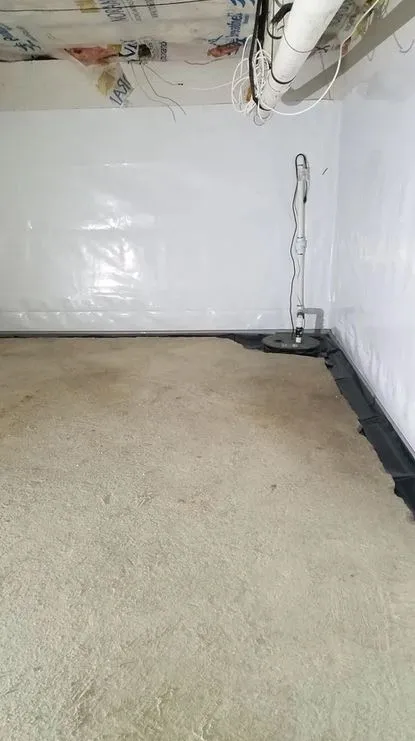
Core Waterproofing Engineering Terms
Perimeter Drain System
A subsurface drainage channel installed along foundation footings to collect groundwater before it reaches the basement interior.
Hydrostatic Pressure
The force exerted by saturated soil pushing water against foundation walls and floors.
Sump Pump System
A mechanical system that collects and discharges groundwater away from a structure.
Exterior Waterproofing Membrane
A protective barrier applied to foundation walls to block lateral moisture intrusion.
Capillary Action
The process by which water moves through porous materials such as concrete or masonry.
Why Waterproofing Failures Are Often Misdiagnosed
“If it’s dry now, the problem is solved”
This assumption leads to many repeat failures. Basement systems may appear successful immediately after installation because surface moisture is temporarily blocked.
However, groundwater pressure does not disappear. If drainage or pressure relief is incomplete, water continues to accumulate behind the structure, eventually finding new entry paths.
Long-term success depends on controlling the system that causes water movement, not just the visible symptoms.
Structured Approach to Waterproofing Systems
Waterproofing is most effective when approached as a comprehensive groundwater management strategy rather than a short-term repair. A structured engineering-based method focuses on identifying the causes of water intrusion and designing systems that address both pressure and flow behavior around the structure.
This approach typically includes a full assessment of subsurface conditions, including how water moves through soil and interacts with foundation walls. From there, engineered drainage solutions are designed to reduce hydrostatic pressure before it can enter or damage the structure.
Core components of this approach include:
• Detailed site evaluation to understand groundwater movement and pressure zones
• Engineered drainage planning to manage and redirect water away from the structure
• Integrated protection systems combining interior and exterior water management solutions
• Properly sized discharge systems designed to handle high-volume water events
• Long-term maintenance planning to support ongoing system performance
By addressing the underlying conditions that cause water intrusion, this method prioritizes long-term reliability and reduces the likelihood of recurring issues.
Real-World Conditions That Affect System Performance
Waterproofing systems do not operate in controlled environments; they are influenced by soil composition, grading, and foundation history.
Older homes in The Fan District often require customized drainage adjustments due to irregular foundation depths and long-term settlement patterns. Properties in Church Hill frequently experience directional groundwater movement caused by slope-driven soil saturation. In Shockoe Bottom, fluctuating groundwater levels and dense soil conditions create persistent hydrostatic pressure challenges.
These real-world conditions explain why even high-quality systems perform differently depending on site-specific engineering decisions.
Homeowners evaluating basement waterproofing in Richmond, VA, solutions often underestimate how significantly local soil and water behavior impact system design requirements.
Why Professionally Installed Systems Still Fail
Even professionally installed systems can fail when engineering assumptions are incomplete or outdated.
Common causes include:
- Drainage systems designed for average rather than peak conditions
- Lack of exterior water diversion strategy
- No redundancy in pump or discharge systems
- Soil settlement altering drainage flow paths over time
These failures are not necessarily installation mistakes; they are often design limitations.
Engineering-Led Waterproofing Perspective
Effective waterproofing requires aligning structural design with groundwater behavior. The goal is not temporary dryness but long-term protection of the foundation system.
Key performance priorities include:
- Stable moisture control under seasonal variability
- Predictable drainage performance during extreme weather
- Reduced recurrence through system integration
- Long-term accessibility for inspection and maintenance
In practice, homeowners seeking Richmond VA basement waterproofing often find that durability depends more on system design than on the specific materials used.
In Summary
Basement waterproofing performance is ultimately determined by how effectively a system manages groundwater pressure, drainage capacity, and structural interaction over time. Short-term fixes fail because they only address symptoms. Long-term systems succeed because they are engineered to control the underlying hydraulic forces affecting the foundation.
For a structured, engineering-driven approach to long-lasting results in Richmond basement waterproofing, the key difference lies in system integration, redundancy, and pressure management from the outset. At Tiger C Construction, LLC, solutions are designed by addressing groundwater behavior, drainage capacity, and foundation conditions as a complete system rather than isolated fixes, helping ensure more reliable long-term performance.
To learn more or schedule a consultation, contact us today.
People Also Ask
What causes most basement leaks?
Hydrostatic pressure buildup in saturated soil is the most common cause of basement water intrusion.
Can sump pumps prevent flooding completely?
No. They reduce risk significantly but must be supported by proper drainage design and backup systems.
Does waterproofing increase home value?
Yes. Proper waterproofing improves structural reliability and reduces the risk of future repairs, which positively impacts resale value.
What is the most reliable waterproofing method?
A hybrid system combining exterior waterproofing, interior drainage, and active water removal provides the highest reliability.