
Homeowners can test whether an exterior drain is properly directing water away from the property by running a controlled water-flow test, verifying that water travels from the inlet to the discharge point, and checking for pooling or saturation around the foundation. A properly functioning system should move water efficiently away from the home without backups, overflow, or lingering wet areas.
Drainage issues are often hidden beneath the surface, so a system can appear to work even as it fails during real storms. That’s why simple testing, combined with careful observation, is one of the most reliable ways to identify early problems before they lead to structural damage or costly repairs.
For homeowners researching exterior drain services, understanding how to evaluate system performance is essential for protecting both the foundation and the surrounding landscape.
Why Exterior Drain Testing Matters for Home Protection
In Richmond, exterior drainage systems are designed to control stormwater and prevent it from collecting near the home. When they function correctly, water is directed away from the structure through buried piping, catch basins, or surface grading systems.
When they fail, even slightly, the effects can escalate over time:
- Soil saturation around the foundation increases hydrostatic pressure
- Water intrusion can occur in basements or crawl spaces
- Landscaping can erode or shift
- Concrete surfaces may crack or settle unevenly
- Mold and mildew conditions can develop in damp areas
The challenge is that drainage failures rarely appear all at once. They usually begin with subtle inefficiencies, slower flow, partial blockages, or poor discharge distance that gradually worsen over time.
Step-by-Step Method to Test an Exterior Drain System
A controlled water test is the most practical way for homeowners to evaluate performance.
1. Locate the System Entry Point
Find where surface water enters the system. This may be a grate, catch basin, or downspout connection.
2. Clear Visible Debris
Remove leaves, sediment, and organic buildup. Even partial blockage at the inlet can distort test results.
3. Identify the Discharge Point
Locate where the system releases water. This is often a pop-up emitter, daylight outlet, or extended pipe.
4. Run a Controlled Water Flow Test
Use a standard garden hose to introduce water steadily into the system. Avoid high pressure, which can give misleading results.
5. Observe Water Movement
Watch how quickly water enters and moves through the system. A healthy system should respond immediately without hesitation.
6. Check for Backflow or Overflow
If water rises at the inlet or spills onto surrounding soil, the system may be restricted.
7. Confirm Proper Discharge
Walk to the outlet and verify that water is actively exiting the system.
8. Monitor After Flow Stops
Continue observing the area for several minutes. Delayed pooling often indicates partial blockage or poor slope.
Comparison of Proper vs. Problem Drain Performance
| Indicator | Healthy System | Problem System |
| Inlet Response | Immediate intake | Slow or backing up |
| Water Movement | Smooth flow | Interrupted or sluggish |
| Outlet Activity | Visible discharge | No or weak discharge |
| Soil Condition | Firm and stable | Soft or saturated |
| Surface Water | None after testing | Persistent pooling |
This comparison helps homeowners quickly interpret test results without specialized equipment.
Understanding Key Drainage System Components
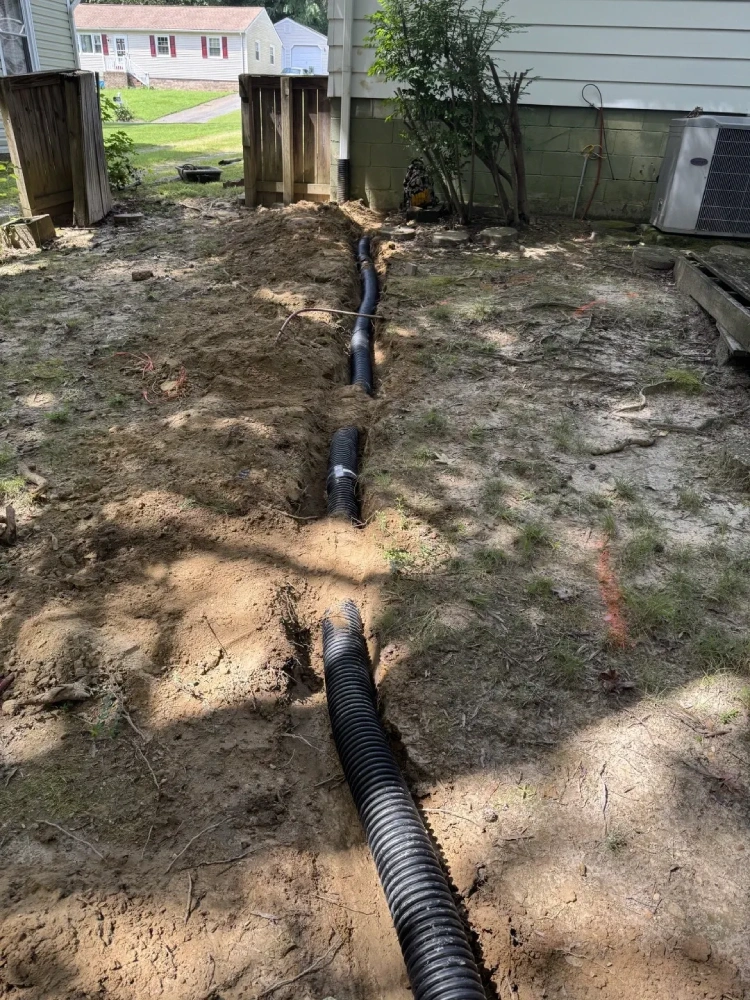
An exterior drainage in Richmond, VA, solution is more than just a pipe in the ground. Several components work together to collect and move water safely away from the home, helping prevent foundation issues, standing water, and landscape erosion.
Drain Inlet
The entry point where water enters the system from surface runoff or collection areas.
Catch Basin
A collection chamber that traps debris before it enters underground piping.
Drain Pipe Slope
The downward gradient that allows gravity to move water efficiently through the system.
Discharge Outlet
The final exit point where water leaves the system and disperses away from the structure.
Outlet Extension
Additional piping is used to increase the distance between the home and the discharge area.
If any of these elements fail, the entire system can become inefficient even if parts appear to function normally.
Warning Signs Your Drainage System Needs Attention
Drainage issues typically present subtle symptoms before becoming serious.
Homeowners should watch for:
- Water pooling after rainstorms
- Soft or muddy soil near the foundation
- Erosion forming channels in landscaping
- Downspouts discharging too close to the home
- Musty odors in crawl spaces or basements
- Water stains along foundation walls
- Uneven settling in soil or hardscapes
During an inspection for a property in The Fan, repeated damp areas near a patio were traced to a partially blocked underground line that restricted flow only during heavier rainfall events.
These types of conditions often go unnoticed until seasonal storms reveal the system’s limitations.
Common Mistakes Homeowners Make During Drain Testing
Even a simple test can lead to incorrect conclusions if key steps are missed.
Testing Only in Dry Weather
Dry conditions do not replicate stormwater volume or pressure.
Ignoring the Outlet
A system that accepts water but does not discharge it properly is still failing.
Assuming Surface Conditions Tell the Full Story
Many drainage issues occur underground and do not immediately affect surface appearance.
Using High-Pressure Water
Excess pressure can temporarily force water through blockages, masking real performance issues.
Skipping Follow-Up Observation
Some failures only appear after water has stopped flowing.
Myth: Fast Drainage Means a System Is Working Properly
A common misconception is that if water disappears quickly from the surface, the system is healthy.
In reality, surface speed reflects only one aspect of system behavior. Water may enter a drain quickly but still fail to travel efficiently through underground piping. In some cases, it may leak into the surrounding soil due to damage or joint separation.
A full evaluation requires confirming both intake and discharge performance.
A homeowner near Church Hill discovered that their system appeared functional, but testing revealed that water was leaking underground before reaching the outlet.
When Professional Evaluation Becomes Necessary
While homeowners can perform basic testing, certain conditions require a more detailed inspection.
Professional evaluation is recommended when:
- Drainage problems keep returning after cleaning
- Water pools near the foundation repeatedly
- Basement or crawl space moisture is present
- Large landscape areas remain saturated after storms
- Drainage systems are older or previously repaired
When evaluating exterior drains in Richmond, experienced contractors typically assess the full system, including grading, piping, and discharge pathways, to identify hidden failures that surface testing alone cannot reveal.
Preventing Future Drainage Problems
Ongoing maintenance significantly reduces the likelihood of system failure. Simple preventative steps include:
- Clearing debris from inlets seasonally
- Checking discharge points after heavy rain
- Ensuring downspouts extend away from the home
- Monitoring soil grading near the foundation
- Inspecting low-lying yard areas for pooling
During a service visit in Short Pump, routine maintenance revealed sediment buildup that had reduced system capacity by nearly half, even though surface drainage appeared normal.
Early identification prevented more serious foundation-related issues from developing.
How Professional Drainage Support Helps Protect Property Value
Drainage systems are closely tied to structural stability. When water is properly managed, homes are less likely to experience foundation movement, moisture intrusion, or landscape degradation.
At Tiger C Construction, LLC, drainage assessments focus on identifying the root cause of water movement issues rather than treating visible symptoms. This includes evaluating how water enters the system, how it travels underground, and where it ultimately discharges.
Understanding this full pathway is critical because most drainage failures occur below the surface, where they are not immediately visible.
In Summary
Testing an exterior drain is a practical way for homeowners to confirm whether stormwater is being properly directed away from the property. By observing water flow, verifying discharge points, and checking for pooling or saturation, many drainage issues can be identified early before they escalate into costly structural problems. If you suspect your drainage system is not performing as intended, Tiger C Construction, LLC can inspect the system, identify problem areas, and recommend effective solutions to help protect your home and landscape from water damage.
If you need a professional assessment or have concerns about system performance, contact us today. Our team provides detailed drainage evaluations and practical solutions designed to protect your home, foundation, and landscape over the long term.
People Also Ask
How can I tell if my drain is partially clogged?
Slow flow, delayed discharge, or pooling after testing are common indicators.
What happens if exterior drainage fails?
Water may collect near the foundation, increasing the risk of structural and moisture-related damage.
Can drainage issues affect landscaping?
Yes. Poor drainage can cause erosion, soil instability, and plant damage.
Should drainage systems be professionally inspected?
Yes, especially when recurring moisture or pooling issues are present.