
DIY crawl space encapsulation can last for years when installed correctly, but matching the longevity of a professional system depends on proper moisture control, surface preparation, materials, sealing, and ongoing maintenance. The installation itself is only part of the equation. If drainage problems, excess humidity, or structural issues are left unresolved, even a professionally installed system can underperform.
What Determines How Long Encapsulation Lasts?
The longevity of an encapsulated crawl space depends on several interconnected factors:
- Condition of the crawl space before installation
- Quality and thickness of the vapor barrier
- Effectiveness of seams and perimeter seals
- Moisture and drainage control
- Wall and floor preparation
- Humidity management
- Dehumidifier performance
- Quality of installation
- Routine inspection and maintenance
Tiger C Construction explains that moisture can enter crawl spaces through foundation walls and soil, creating conditions conducive to mold growth, lumber deterioration, and uneven flooring. The company recommends addressing water accumulation before sealing the crawl space.
This is one of the biggest differences between simply covering a crawl space and creating a complete moisture-control system.
Can DIY Encapsulation Last as Long as Professional Installation?
Potentially, but there is no guaranteed lifespan for either approach.
A carefully installed DIY system using appropriate materials can remain functional for a long time. However, homeowners must correctly identify and address the conditions affecting the crawl space before installing the vapor barrier.
Professional installation can provide an advantage because the installer can evaluate the space, identify moisture sources, address necessary preparation, and install the components as a coordinated system.
Tiger C Construction describes its encapsulation approach as sealing the ground surface and perimeter foundation walls while using a dehumidification unit to control moisture and humidity.
Therefore, the longevity comparison should focus less on DIY versus professional and more on complete installation versus incomplete installation.
Why Preparation Matters More Than the Barrier Alone
A vapor barrier cannot solve every crawl space problem by itself.
Before encapsulation, homeowners should determine whether the space has:
- Standing water
- Foundation leaks
- Poor drainage
- Excessive humidity
- Damaged wood
- Mold or microbial growth
- Uneven or deteriorated surfaces
- Open vents or unsealed penetrations
Sealing a moisture problem inside the crawl space can create a different set of problems rather than eliminate the original source.
Tiger C Construction specifically notes that water and moisture should be controlled before encapsulation. Its published process focuses on creating a sealed environment while managing humidity through dehumidification.
DIY Crawl Space Encapsulation: Where Longevity Can Suffer
DIY projects can seem straightforward because the basic concept is to place a vapor barrier over the floor and seal the space. The actual installation can be more complicated.
Incomplete Sealing
Small gaps around walls, supports, penetrations, and access points can reduce the system’s effectiveness.
Poor Seam Installation
If sections of vapor barrier are not properly joined and sealed, moisture can find pathways through the system.
Inadequate Wall Preparation
Foundation walls may require specific preparation and sealing before insulation or barrier materials are installed.
Ignoring Humidity
A sealed crawl space still needs appropriate moisture management. Simply closing vents does not automatically create a stable environment.
Overlooking Existing Damage
Rotten wood, structural concerns, drainage problems, or persistent water intrusion should be evaluated before encapsulation.
These issues can shorten the installation’s useful life, even when the materials themselves are durable.
What Does Professional Installation Typically Address?
A professional approach generally involves evaluating the crawl space before determining which components are necessary.
Tiger C Construction states that its crawl space services include waterproofing, encapsulation and moisture control, carpentry repairs to floor systems, and stabilization supports for uneven or squeaky floors.
Its published encapsulation process includes:
- Evaluating moisture conditions
- Addressing water accumulation
- Sealing the ground surface
- Sealing foundation walls
- Controlling humidity with dehumidification
- Inspecting the completed system
This broader approach matters because encapsulation is intended to control the crawl space environment rather than simply cover the ground.
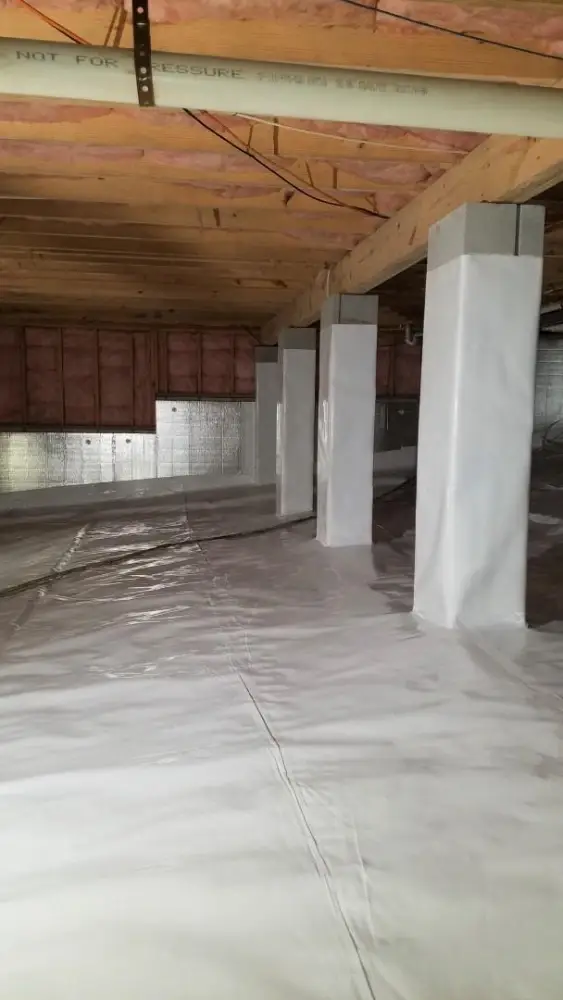
Materials Also Affect Longevity
The quality and suitability of materials can influence durability.
A crawl space system may include:
- Reinforced vapor barriers
- Foundation wall insulation
- Mechanical fasteners
- Specialized seam tape or sealants
- Access-door seals
- Dehumidification equipment
The material should also be appropriate for the conditions in which it will be installed.
A cheaper barrier may reduce the initial project cost, but crawl space encapsulation services in Richmond should not be based solely on price. Consider the space’s conditions, installation method, material quality, and expected moisture exposure when choosing the right solution.
Does Richmond’s Climate Make Moisture Control Important?
Yes. Crawl spaces can be exposed to moisture from soil, groundwater, humidity, and foundation surfaces. Richmond homeowners should therefore consider moisture management when evaluating an encapsulation project.
For homeowners in Church Hill, The Fan, or Forest Hill, the same basic principle applies: the crawl space should be evaluated for its specific moisture conditions rather than treated with a one-size-fits-all installation.
Tiger C Construction’s Richmond-focused information identifies moisture and humidity control as central objectives of encapsulation.
DIY vs Professional Encapsulation
| Factor | DIY Installation | Professional Installation |
| Initial labor cost | Lower | Higher |
| Preparation | Homeowner-managed | Professionally evaluated |
| Material selection | Homeowner responsibility | Installer-guided |
| Moisture diagnosis | May be limited | More comprehensive |
| Installation consistency | Depends on skill | Experienced installation |
| Equipment integration | May require separate work | Can be incorporated into system |
| Long-term performance | Highly variable | More predictable when properly installed |
The table does not mean every professional installation will outperform every DIY project. A skilled homeowner, using appropriate materials and following proper procedures, can produce a durable result. Conversely, poor professional workmanship can also cause problems.
The difference is that professional installation can reduce the risk of missing important conditions or installation details.
When Does DIY Make Sense?
DIY may be reasonable when the crawl space is accessible, relatively clean, dry, structurally sound, and free from significant water intrusion.
It can also make sense for homeowners with the tools, time, and construction experience to complete detailed sealing and installation work.
However, homeowners should reconsider DIY when the crawl space has persistent moisture, structural deterioration, drainage problems, difficult access, or other conditions that require specialized evaluation.
When Is Professional Installation the Better Choice?
Professional installation is generally more appropriate when the crawl space has complicated moisture or structural conditions.
Consider professional help when:
- Water enters the crawl space
- Wood shows signs of deterioration
- Humidity remains consistently high
- The foundation has moisture problems
- Drainage improvements may be necessary
- A dehumidifier needs to be integrated
- The crawl space has difficult access
- You want a comprehensive system rather than a basic barrier
Tiger C Construction specializes in crawl space encapsulation in Richmond, VA, moisture control, waterproofing, and related crawl space repairs. Its service area includes Richmond and surrounding communities.
Common Myth: Professional Encapsulation Lasts Forever
Myth: Once a crawl space is professionally encapsulated, it never needs attention again.
Reality: Encapsulation reduces moisture exposure and helps control the crawl space environment, but the system still requires monitoring.
Seals can deteriorate, equipment can require service, and new water intrusion can develop. A dehumidifier also needs appropriate maintenance to continue controlling humidity effectively.
Longevity comes from both proper installation and continued maintenance.
Final Verdict: Is DIY Comparable in Longevity?
DIY crawl space encapsulation can achieve long-term performance, but it is not automatically comparable to professional installation. The deciding factors are preparation, moisture control, material quality, sealing accuracy, equipment, and maintenance.
For a straightforward crawl space with minimal moisture concerns, an experienced homeowner may be able to complete a durable installation. More complex spaces pose greater risks because sealing the area without addressing underlying water or structural issues can reduce the system’s effectiveness.
For homeowners researching crawl space encapsulation in Richmond, the most important consideration is not simply who installs the barrier. The goal should be a complete system that controls moisture and protects the crawl space over time.
Protect Your Crawl Space for the Long Term
The most durable encapsulation is one that addresses the entire crawl space environment rather than relying solely on a vapor barrier. Proper preparation, moisture control, quality materials, careful sealing, and ongoing maintenance all contribute to long-term performance.
Tiger C Construction, LLC provides crawl space encapsulation and moisture-control services for homeowners throughout Richmond and surrounding areas.
Contact us today for an evaluation of your crawl space and a solution based on its actual condition.
People Also Ask
How Long Does Crawl Space Encapsulation Last?
There is no universal lifespan. Durability depends on materials, installation quality, moisture conditions, environmental exposure, and maintenance.
Is DIY Crawl Space Encapsulation Worth It?
DIY can reduce labor costs, but it requires careful preparation and installation. Professional help may provide better value when moisture, drainage, or structural problems are present.
Does Encapsulation Stop Crawl Space Moisture?
A properly designed encapsulation system helps control moisture by sealing surfaces and managing humidity. Existing water intrusion should be addressed before sealing.
Does an Encapsulated Crawl Space Need a Dehumidifier?
Not every crawl space has identical requirements, but humidity control can be an important part of a sealed system. Tiger C Construction incorporates dehumidification into its complete encapsulation approach.
Can Crawl Space Encapsulation Prevent Mold?
Encapsulation helps reduce conditions that support mold by controlling moisture and humidity. It should not be considered a substitute for addressing existing mold or active water intrusion.