
Water stains on basement walls can indicate previous leaks, condensation, groundwater seepage, or moisture passing through the foundation. Even without visible leaks, lingering dampness may cause discoloration. Finding the underlying cause helps prevent recurring stains, mold growth, and further structural damage.
What Causes Basement Water Stains Without Visible Leaks
Basement water stains can develop even when there is no dripping water or standing puddle. Moisture may enter slowly, appear only during certain weather conditions, or evaporate before you notice it.
Here are five common causes.
1. Previous Water Intrusion
Water stains can remain long after a previous leak has stopped. Heavy rainfall, plumbing problems, or drainage issues may have introduced moisture into the basement.
Even after the affected materials dry, mineral deposits and discoloration can remain visible.
If stains are old and unchanged, they may indicate a previous problem. However, recurring stains or new discoloration suggest that moisture could still be entering.
2. Condensation on Basement Walls
Condensation occurs when warm, humid air meets a cooler surface, causing water vapor to turn into liquid.
Basement walls and pipes are particularly vulnerable because they often remain cooler than the surrounding air.
You might notice:
- Damp patches during humid weather
- Moisture around exposed pipes
- Discoloration on cold concrete walls
- A musty smell without visible water
Condensation can cause staining without any exterior leak.
3. Groundwater Seepage
Groundwater can move through small openings or porous foundation materials, especially after periods of heavy rainfall.
Concrete and masonry can absorb and transport moisture through tiny pores. This process is called capillary action.
Homeowners in Magnolia Green may notice staining near the basement floor or lower foundation walls after prolonged wet weather. Such patterns can indicate ground moisture, although an inspection is needed to confirm the cause.
4. Poor Exterior Drainage
When rainwater collects near your foundation, it increases the possibility of moisture entering your basement.
Common contributing factors include clogged gutters, short downspouts, improper grading, and drainage systems that do not move water far enough from the house.
The moisture may disappear after the surrounding soil dries, leaving stains as evidence of earlier water intrusion.
5. Hidden Plumbing Leaks
Not every plumbing leak produces an obvious puddle.
Small leaks inside walls, beneath flooring, or around plumbing connections can slowly dampen nearby materials.
Although the affected area may dry, stains can remain on surfaces. For homeowners considering basement waterproofing in Moseley, a plumbing inspection may help identify leaks near water supply or drainage lines before further moisture damage occurs.
How Can You Identify Different Types of Basement Water Stains
The appearance and location of a stain can provide useful clues about its possible source.
| Stain appearance | Possible cause | What to check |
| White, powdery residue | Efflorescence from moisture movement | Concrete and masonry walls |
| Yellow or brown discoloration | Previous water intrusion or material staining | Walls, ceilings, plumbing |
| Dark, irregular patches | Persistent dampness or possible mold | Humidity and hidden moisture |
| Stains near the floor | Groundwater seepage or foundation drainage problems | Wall-floor joints |
| Stains around pipes | Condensation or plumbing leaks | Pipe surfaces and connections |
These patterns are indicators, not definitive diagnoses. Different moisture problems can produce similar stains.
For example, white powder on concrete is commonly called efflorescence. It forms when water moves through masonry, dissolves salts, and leaves deposits behind as the moisture evaporates.
Efflorescence itself is not mold, but it can indicate that moisture has traveled through the material.
What Do Common Basement Moisture Terms Mean
Understanding a few basic terms can help you recognize the difference between surface staining and a recurring water problem.
Efflorescence: White, crystalline mineral deposits left behind when moisture evaporates from concrete or masonry.
Hydrostatic pressure: Pressure exerted by groundwater against below-grade foundation walls and floors.
Capillary action: The movement of moisture through small pores in building materials, sometimes against gravity.
Condensation: Liquid moisture that forms when humid air contacts a sufficiently cold surface.
Relative humidity: The amount of water vapor in the air compared with the maximum it can hold at that temperature.
Waterproofing: A combination of methods designed to prevent or manage water intrusion, potentially including drainage systems, membranes, and sump pumps.
These terms describe different moisture behaviors. Recognizing which process is occurring helps determine the appropriate solution.
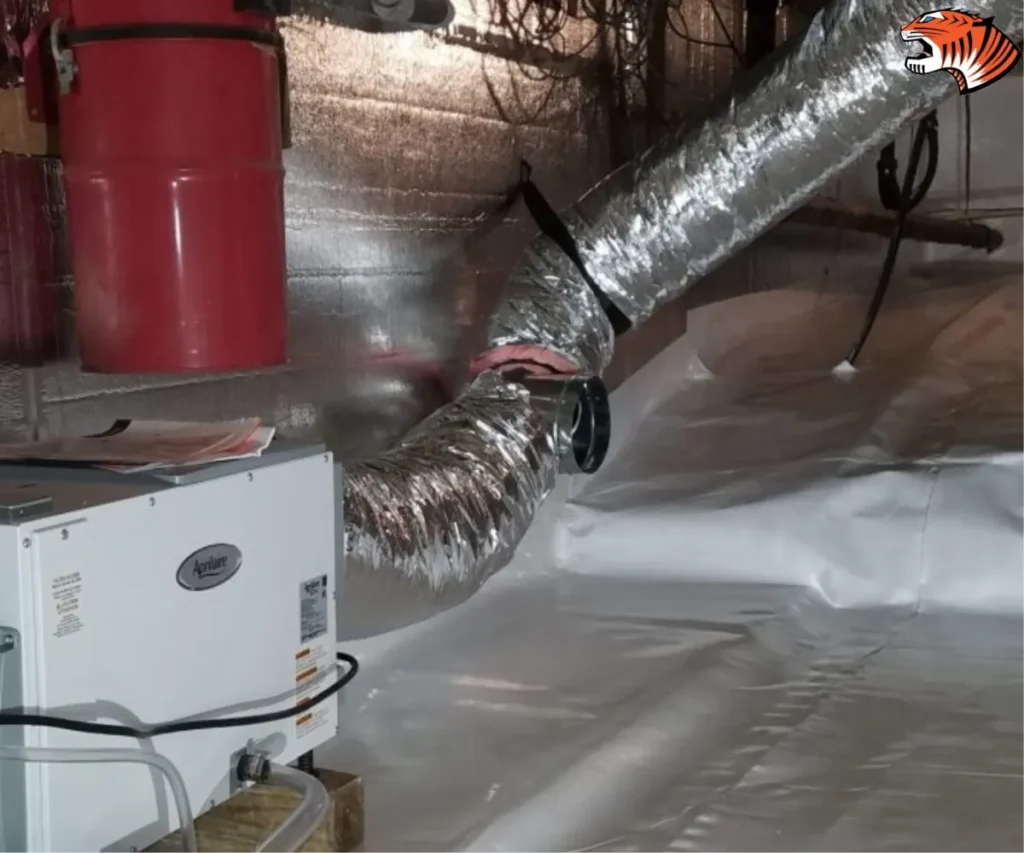
Myth: No Active Leak Means Your Basement Is Waterproof
One common misconception is that a basement is waterproof as long as there is no standing water or visible leak.
The reality is that a basement can have significant moisture problems without an obvious leak.
Moisture can enter through foundation walls, collect behind finished surfaces, or form through condensation.
A basement may look dry while humidity remains elevated or moisture continues moving through porous materials.
Painting over stains or applying ordinary waterproof paint also does not necessarily solve the underlying problem.
Surface coatings may improve appearance, but they cannot correct improper drainage, hydrostatic pressure, or hidden plumbing damage.
The most reliable approach is to identify how moisture is entering or accumulating before choosing a repair.
When Should You Be Concerned About Basement Water Stains
Some water stains are primarily cosmetic, while others indicate conditions that deserve immediate attention.
Watch for these warning signs:
- Stains that expand or repeatedly darken
- Peeling paint or deteriorating drywall
- Persistent musty odors
- Visible mold-like growth
- Cracks accompanied by water intrusion
- Damp flooring or damaged baseboards
- Bowing or shifting foundation walls
Water stains alone do not prove that a foundation is structurally damaged. However, significant cracks, wall movement, or recurring moisture warrant professional evaluation.
The EPA also notes that controlling indoor moisture is essential for preventing mold growth.
If your home has experienced water damage, Moseley, VA basement waterproofing can help address moisture issues and protect finished surfaces, stored belongings, and building materials.
What Are the Best Solutions for Basement Water Stains
The appropriate solution depends on the source of the moisture, the condition of your foundation, and the drainage around your property.
Compare Common Moisture Control Solutions
| Solution | Best suited for | Main purpose |
| Dehumidifier | Excess indoor humidity | Reduces airborne moisture |
| Gutter and downspout improvements | Roof runoff near foundations | Redirects rainwater |
| Exterior grading improvements | Water collecting near the home | Moves surface water away |
| Interior drainage system | Recurring groundwater intrusion | Collects and redirects incoming water |
| Sump pump | Water collected in a sump basin | Pumps accumulated water away |
| Exterior waterproofing | Water penetrating below-grade walls | Helps prevent exterior water intrusion |
| Plumbing repair | Damaged or leaking pipes | Stops water escaping plumbing systems |
Not every basement needs a complete waterproofing system.
For example, condensation caused by elevated humidity may improve with proper moisture control, while recurring groundwater intrusion may require a drainage system.
In Westerleigh, homeowners dealing with persistent lower-wall staining should consider an inspection of surrounding drainage and foundation conditions before selecting a repair.
The goal is to correct the source rather than repeatedly covering the visible damage.
How Does Professional Basement Waterproofing Help
Professional basement waterproofing begins with identifying where moisture originates and how it moves through the structure.
An assessment may include checking foundation walls, floor joints, grading, downspouts, drainage systems, and signs of past water intrusion.
Depending on the findings, recommended solutions may involve interior or exterior drainage, sump pump installation, foundation crack repairs, or other moisture management improvements.
Tiger C Construction, LLC helps homeowners in, protect their homes with professional basement waterproofing in Moseley, VA solutions.
As a family-owned business with over 20 years of experience, the company evaluates moisture problems and recommends solutions suited to individual property conditions.
Addressing the underlying cause can reduce recurring water intrusion and protect your basement’s usability.
People Also Ask
Can basement water stains appear without a leak?
Yes. Condensation, past leaks, groundwater seepage, and moisture through foundation walls can cause stains.
Are white stains on basement walls a sign of water damage?
White, powdery deposits called efflorescence indicate moisture movement through concrete or masonry.
Should I worry about dry water stains?
Yes, if stains return, spread, or appear with musty odors, as these may indicate ongoing moisture problems.
Can a dehumidifier remove basement water stains?
No. It reduces humidity but cannot remove existing stains or stop water seepage.
When should I call a basement waterproofing professional?
Seek an inspection if stains recur, worsen after storms, or appear alongside mold, damp floors, or foundation cracks.
Protect Your Basement Before Moisture Causes Bigger Problems
Water stains may seem harmless when your basement feels dry, but they can reveal previous or ongoing moisture problems. Whether the cause is condensation, groundwater seepage, or poor drainage, early identification can help prevent recurring damage.
Don’t let unexplained water stains become a larger basement problem.
With over 20 years of experience, Tiger C Construction, LLC helps homeowners address moisture problems and protect their home’s foundation. The team provides practical solutions to keep basements dry, functional, and better protected from water damage.
Contact us today to request a free estimate and take the next step toward a drier, better-protected basement.