
The best way to handle structural movement is to identify the underlying cause first, then match it to a repair system designed for that specific failure pattern. Effective decisions rely on soil behavior, load distribution, and accurate diagnostics, not on surface cracks alone. A properly evaluated Richmond foundation repair approach prevents temporary fixes and supports long-term structural stability.
This guide breaks down how to evaluate damage, compare repair methods, and choose a contractor with real engineering competence.
Key Signs You Need Professional Help
Foundation problems develop gradually, often showing early warning signs long before major structural shifts occur.
Common indicators include cracks in drywall or brickwork, sloping floors, and doors or windows that no longer align properly. These symptoms typically reflect movement beneath the structure rather than isolated cosmetic damage.
Moisture intrusion in crawl spaces or basements can accelerate soil instability, especially in properties with poor drainage. Over time, this leads to uneven settlement or pressure against foundation walls.
A thorough evaluation of Richmond, VA, foundation repair needs usually begins at this stage, when symptoms are visible but structural failure is still preventable.
Additional warning signs include:
- Gaps forming between walls and ceilings
- Nail pops or recurring drywall cracking
- Separation between exterior trim and siding
- Uneven slab surfaces or tilted flooring
Each of these symptoms suggests that load transfer is no longer uniform across the foundation system.
Step-by-Step Decision Process
Selecting the correct repair strategy requires a structured engineering approach rather than visual estimation.
Step 1: Structural inspection
A full inspection determines whether movement is vertical (settlement), lateral (pressure), or related to soil expansion. This classification is essential because each failure type requires a different corrective method.
Step 2: Soil evaluation
Soil composition and moisture behavior directly influence foundation movement. Clay-heavy soils expand and contract seasonally, while sandy soils tend to shift under load. Understanding this behavior is critical for any foundation repair in Richmond, VA decision.
Step 3: Load path analysis
Engineers assess how the weight of the building is transferred through the structure. If load paths are disrupted, certain areas may bear excessive stress, leading to cracking or sinking.
Step 4: System matching
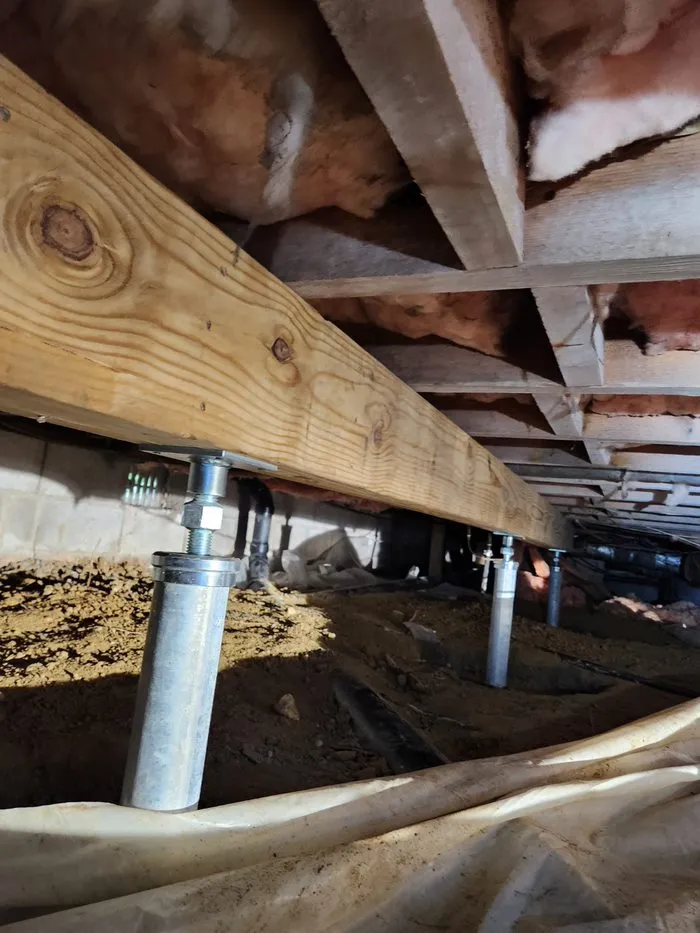
Once the cause is confirmed, the appropriate repair system, such as piers, anchors, or slab lifting, is selected.
Step 5: Contractor validation
The final step involves verifying installation experience, warranty terms, and prior project performance in similar soil conditions.
This structured process reduces misdiagnosis and ensures the durability of repairs.
Comparing Repair Methods
Foundation systems are not interchangeable. Each method addresses a specific structural failure mechanism.
| Repair Method | Best Use Case | Installation Depth | Durability | Primary Function |
| Steel Push Piers | Severe settlement | Deep load-bearing strata | Very high | Permanent stabilization |
| Helical Piers | Moderate settlement | Adjustable depth | High | Load transfer to stable soil |
| Slabjacking | Sunken slabs | Near-surface void fill | Medium | Concrete lifting |
| Wall Anchors | Bowing walls | Exterior soil tie-back | High | Lateral stabilization |
| Carbon Fiber Straps | Minor wall cracking | Surface reinforcement | Medium-high | Crack restraint |
The most effective outcomes occur when the system matches the failure mechanism precisely. Incorrect pairing often leads to recurring movement or partial repair failure.
In many foundation repair cases in Richmond, multiple systems are used together to address combined settlement and lateral pressure issues.
What Drives Cost and Timeline
Repair costs are not fixed because foundation issues vary widely in severity and structural complexity.
Key cost drivers include:
- Depth required to reach stable soil layers
- Number of piers or anchors needed
- Accessibility of repair zones
- Severity of structural displacement
- Drainage and water management conditions
Projects involving deep stabilization typically require more time due to excavation and load testing requirements. In contrast, slab lifting can often be completed in a single day, depending on site conditions.
Timeline variability is especially common in foundation repair projects because soil moisture levels can change installation feasibility.
Weather conditions, groundwater levels, and soil compaction consistency all influence scheduling and execution speed.
Definition List: Core Technical Concepts
Underpinning
A structural reinforcement process that transfers building loads to deeper, more stable soil layers using engineered support systems.
Load-Bearing Strata
A stable underground layer capable of supporting long-term structural weight without compression failure.
Differential Settlement
Uneven sinking of a structure caused by inconsistent soil density or moisture variation beneath the foundation.
Helical Pier System
A steel foundation support system is installed by mechanically screwing into the ground until reaching stable resistance levels.
Wall Anchorage System
A stabilization method that uses external anchors to counteract inward pressure on basement walls.
Structural Stabilization
The process of preventing further foundation movement without necessarily restoring the original elevation.
Understanding these terms helps property owners interpret repair proposals more accurately, especially when evaluating foundation repair in Richmond options.
Misconceptions About Foundation Damage
One of the most persistent myths is that visible cracks always indicate severe structural failure. In reality, many cracks result from minor or localized movement that does not compromise overall structural integrity.
Another misconception is that cosmetic patching resolves foundation issues. Surface repairs only address visible damage and do not correct the underlying soil instability that caused the movement in the first place.
A third misunderstanding is that all foundation problems require full replacement or major reconstruction. Most structural issues can be corrected using targeted stabilization systems when properly diagnosed.
These misunderstandings often lead to unnecessary repair costs or delayed intervention, particularly in foundation repair cases where early detection is critical.
Applying our Structural Cipher Method to solve this.
The Structural Cipher Method is a diagnostic framework that translates physical foundation symptoms into precise engineering solutions.
It begins with signal mapping, where visible indicators such as crack direction, floor slope, and wall separation are documented.
Next is load path analysis, which evaluates how structural weight is redistributed when support zones are compromised. This step identifies areas of overload that may not yet show visible damage.
The final stage is the soil interaction analysis, which examines moisture variations, compaction inconsistencies, and seasonal expansion cycles.
Together, these three layers create a complete diagnostic model that reduces guesswork and improves repair accuracy. In complex foundation repair scenarios, this approach helps prevent over- or under-engineering solutions.
Real-World Soil Variation Insights
Soil conditions can vary significantly over short distances, directly affecting foundation performance and repair strategy selection.
In the Fan District, historic fill soils often cause shallow settlement patterns that respond well to stabilization rather than deep underpinning. These conditions typically require careful load redistribution rather than aggressive lifting.
In Shockoe Bottom, proximity to river-adjacent soils leads to high variability in moisture. This increases lateral pressure on basement walls and often requires reinforcement systems rather than vertical lift solutions.
In Church Hill, layered soil composition can create uneven settlement across structural corners. These cases often require hybrid repair approaches combining stabilization and lifting techniques.
These localized variations explain why foundation repair solutions must be customized rather than standardized.
Definition List: Performance and System Metrics
Pier Load Capacity
The maximum structural weight a foundation support system can sustain without movement or failure.
Soil Resistance Rating
A measurement of subsurface strength used to determine appropriate installation depth.
Wall Deflection Control
The ability of a system to prevent inward or outward movement of foundation walls.
Structural Lift Potential
The degree to which a repair system can restore a structure to its original elevation.
Long-Term Settlement Resistance
The system’s effectiveness in preventing future soil-related movement.
These metrics are essential when comparing proposals in foundation repair projects, especially when multiple contractors recommend different solutions.
In Summary
Foundation repair is most effective when it is based on accurate diagnosis, correct system selection, and verified installation expertise. Ignoring early warning signs increases both structural risk and long-term repair costs.
For professional inspection and engineered solutions, contact Tiger C Construction, LLC. Our team provides precise diagnostics and tailored stabilization strategies designed for long-term structural performance.
If you are evaluating foundation repair, reach out today to schedule a professional assessment and protect your property before minor movement becomes a major structural issue.
Frequently Asked Questions
What is the most durable foundation repair method?
Steel push piers are generally considered the most durable solution for long-term settlement stabilization due to their deep load-bearing capacity.
How long do foundation repairs last?
When properly installed and supported by good drainage, repair systems can last several decades without requiring replacement.
Can foundation issues worsen quickly?
Yes. Soil movement is progressive, meaning small issues can escalate if left unaddressed.
Do homeowners need to leave during repairs?
In most cases, occupants can remain in the structure while work is performed.
How is the correct repair method determined?
A structural inspection evaluates soil behavior, movement type, and load distribution before selecting the appropriate system.