
Sealing vents in your home’s crawl space improves HVAC efficiency by stopping excess moisture and uncontrolled outdoor air from entering. In vented areas, your system must work harder to remove humidity before it can effectively heat or cool the air, wasting energy in the process. Converting to a sealed, unvented design reduces this “moisture energy loss,” often cutting total energy use.
At Tiger C Construction, LLC, we turn neglected crawl spaces into controlled environments that protect your home, stabilize indoor temperatures, and lower energy bills, all while improving comfort and indoor air quality.
The Science of the “Stack Effect” and Your Energy Bill
To understand why sealing vents saves money, you have to understand a physical phenomenon known as the “stack effect.” Homes naturally act like large chimneys; as warm air rises and escapes through the roof and upper-floor windows, a vacuum is created in the lower levels. This vacuum pulls replacement air in from the lowest point, the crawl space.
In a vented home, this replacement air is pulled directly from the outdoors. In the summer, hot, humid air is drawn through your foundation vents. Waterproofing in Richmond addresses this by sealing the space and controlling moisture, preventing that air from migrating upward through floor gaps, electrical wire penetrations, and plumbing bypasses into your living area.
When this happens, your air conditioner has to work twice as hard. It must first remove the heavy moisture from that air (known as latent heat) before it can begin to actually lower the temperature (known as sensible heat). During a recent project for a property in Richmond, our team measured humidity levels in a vented crawl space exceeding 85%, forcing the upstairs AC unit to run near-continuous cycles just to manage the moisture load entering through the floorboards.
Vented vs. Sealed: A Technical Performance Comparison
| Performance Metric | Vented Crawl Space | Sealed/Encapsulated Space |
| Relative Humidity | 70% – 95% (Weather dependent) | Constant 45% – 55% |
| HVAC Load | High (Combats outdoor infiltration) | Low (Stable, conditioned air) |
| Floor Temperature | Drafty in winter; Humid in summer | Consistent with home interior |
| Energy Savings | Baseline Cost | 15% – 25% Reduction |
| Air Quality | High risk of mold/spores | Filtered and controlled |
The “Hidden” Cost of Latent Heat
Most homeowners look at their thermostat and only think about the temperature. However, HVAC systems are designed to handle two different types of heat. Sensible heat is what you feel and what the thermometer measures. Latent heat is the energy stored in water vapor.
In a vented crawl space, the latent heat load is massive. Your air conditioner’s evaporator coil becomes overwhelmed by the volume of water it must condense from the air. This condensation process releases heat, which the AC then has to move back outside. By sealing the vents, you effectively “decouple” your home from the outdoor humidity. This allows the AC to focus almost entirely on sensible cooling, leading to shorter run times and a significantly longer lifespan for your expensive HVAC equipment.
3-Step Process to Improve HVAC Performance
Step 1: Remove Moisture Sources
We clear out old fiberglass insulation that traps moisture, loses effectiveness, and can promote mold, prepping the space for proper sealing.
Step 2: Seal Air Leaks
We fully seal vents, gaps, and rim joists using high-density foam and industrial sealants to block outdoor air and reduce HVAC workload.
Step 3: Install Vapor Barrier
We add a durable, sealed 20-mil vapor barrier to block ground moisture and stabilize temperatures, improving comfort and efficiency year-round.
Why the “Breathing” Myth is Costing You Money
A common concern we hear from homeowners in Richmond, VA, is the belief that sealing vents will trap moisture and cause wood rot. This myth stems from 1950s-era building codes that didn’t account for modern air conditioning or the physics of humidity.
The Truth: Open vents don’t let moisture out; they invite it in. On a humid summer day, the air outside is almost always wetter than the air inside your crawl space. When that warm, wet air hits your cool floor joists (which are cooled by your indoor AC), it reaches its “dew point” and turns into liquid water.
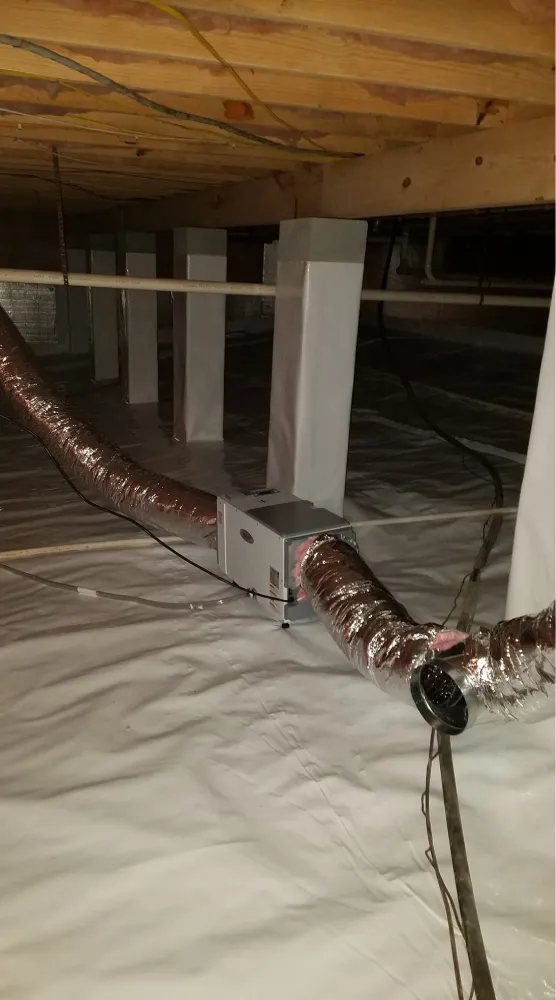
This condensation is what leads to sagging floors, “cupping” hardwoods, and mold. Crawl space waterproofing in Richmond combines sealing with a small amount of conditioned air or a dedicated dehumidifier to create a dry, desert-like zone where wood rot cannot survive. In this environment, your home doesn’t need to “breathe” outdoor air; it just needs to stay dry.
Long-Term Structural Benefits and Home Value
While energy efficiency is the most immediate benefit, sealing this area is also crucial for protecting your home. Over 20 years in the construction industry, we’ve seen homes where subfloors had to be completely replaced due to vent-related moisture damage, a repair that can cost tens of thousands of dollars. That’s why crawl space waterproofing in Richmond, VA, is such an effective solution: it keeps moisture out, preserves your structure, and improves comfort year-round.
A sealed crawl space protects the following:
- Hardwood Flooring: Prevents the expansion and contraction that leads to gaps and buckling.
- Electrical Systems: Reduces corrosion on wiring and junction boxes caused by high humidity.
- Indoor Air Quality: Stops “mycotoxins” and mold spores from being pulled into your breathing air via the stack effect.
- Resale Value: A dry, encapsulated crawl space is a massive “green flag” for home inspectors and savvy buyers.
The Tiger C Difference: Trust, Transparency, and Quality
Choosing Tiger C Construction, LLC means partnering with a family-owned team that has spent two decades perfecting home protection. We treat your home as if it were our own, prioritizing honesty and craftsmanship over quick fixes.
We know that finding a reliable and honest contractor can be difficult. That is why we prioritize clear, transparent communication in everything we do, from the first technical audit to the final day of work. Our goal is for you to feel completely confident that your home is in the hands of professionals who genuinely care about the results and your long-term savings. We utilize only top-grade materials and construction techniques to ensure that your crawl space becomes an asset to your home’s value rather than a liability.
Ready to Lower Your Bills and Protect Your Home?
Don’t let a damp crawl space waste your money and damage your home’s structural integrity. At Tiger C Construction, we are committed to providing the highest quality construction services with the integrity and precision you expect from a local leader.
Ready to protect your home and save on energy costs? Whether you’re in Richmond or the surrounding VA area, we’ll help you create a dry, healthy, and energy-efficient space. Schedule your service appointment today for a free consultation and professional quote!
FAQs:
How much can I save on energy bills?
Homes typically see 15–25% savings, with higher savings in VA’s humid climate because the AC works less to remove moisture.
Will I need a dehumidifier?
Yes. Even with a sealed crawl space, a self-draining dehumidifier keeps humidity at 50%, preventing mold and dust mites.
How long does the process take?
Most crawl spaces are cleaned, sealed, and lined in 3–5 days, with noticeable improvements immediately.Is this permanent?
Yes. With reinforced 20-mil liners and proper sealing, it’s a lasting upgrade requiring minimal maintenance, just annual checks of the dehumidifier and sump pump.