
Basement waterproofing prevents costly damage by controlling moisture before it enters your home’s structure. By managing groundwater, sealing vulnerabilities, and relieving hydrostatic pressure, homeowners can avoid major repairs such as foundation failure, mold remediation, and interior restoration. In practical terms, it’s one of the most cost-effective ways to protect both structural integrity and long-term property value.
Why Basement Waterproofing Is a Critical Financial Safeguard
Water intrusion is not a one-time inconvenience; it’s a progressive structural risk. Moisture entering through foundation walls or floor slabs gradually weakens concrete, corrodes reinforcement materials, and creates conditions for biological growth. Over time, this leads to compounding repair costs that far exceed the investment in preventative waterproofing.
During field inspections, early signs such as damp odors or minor staining often indicate active water movement behind walls. During a recent assessment tied to a basement waterproofing in Richmond, what appeared to be cosmetic discoloration was traced to sustained hydrostatic pressure outside the foundation. Addressing it early prevented wall bowing and avoided a far more invasive structural correction.
From a building science perspective, waterproofing systems are designed to:
- Control subsurface water movement
- Reduce pressure exerted on foundation walls
- Seal porous materials and joints
- Direct water safely away from the structure
This systematic approach transforms the basement from a vulnerable zone into a controlled environment.
Cost Comparison: Prevention vs. Repair
Understanding the Financial Trade-Off
| Category | Preventative Waterproofing | Water Damage Repairs |
| Cost Predictability | Planned and controlled | Variable and often escalating |
| Structural Impact | Prevents deterioration | Repairs existing damage |
| Mold Risk | Minimized | High, often recurring |
| Disruption to Living Space | Minimal | Significant during repairs |
| Long-Term Value | Preserved or increased | Often diminished |
From an investment standpoint, waterproofing is a protective measure, while repairs are reactive expenses that rarely restore full value.
How Basement Waterproofing Prevents Expensive Damage
1. Managing Hydrostatic Pressure
Water accumulating in the soil around your foundation creates lateral pressure. Over time, this pressure forces moisture through cracks and joints. Waterproofing systems, especially drainage solutions- relieve this pressure before it causes structural stress.
2. Eliminating Conditions for Mold Growth
Mold thrives in damp, enclosed spaces. By removing moisture at its source, waterproofing disrupts the conditions mold requires, preventing health risks and costly remediation.
3. Protecting Structural Components
Concrete, while durable, is porous. Continuous exposure to moisture can lead to cracking, spalling, and weakening. Waterproofing preserves the integrity of foundational materials.
4. Preserving Interior Finishes
Basements often house finished living spaces or storage. Water intrusion damages drywall, flooring, and personal belongings, costs that add up quickly.
5. Improving Energy Efficiency
Moisture reduces insulation effectiveness and increases humidity, forcing HVAC systems to work harder. A dry basement supports consistent indoor temperatures and lower energy costs.
In one case involving basement waterproofing in Richmond, VA, correcting both internal drainage and exterior grading reduced humidity levels enough to eliminate the need for supplemental dehumidification, demonstrating how moisture control directly impacts energy performance.
Waterproofing Systems Explained
Definition List: Core Components and Functions
Interior Drainage Systems
: Installed beneath the basement floor to collect water and direct it toward a sump pump system before it reaches the surface.
Sump Pump Systems
: Mechanical units are designed to remove collected water from the basement and discharge it away from the home’s foundation.
Exterior Waterproofing Membranes
: Flexible coatings or sheets applied to foundation walls to prevent water penetration.
French Drains (Perimeter Drains)
: Subsurface piping systems that redirect groundwater away from the structure.
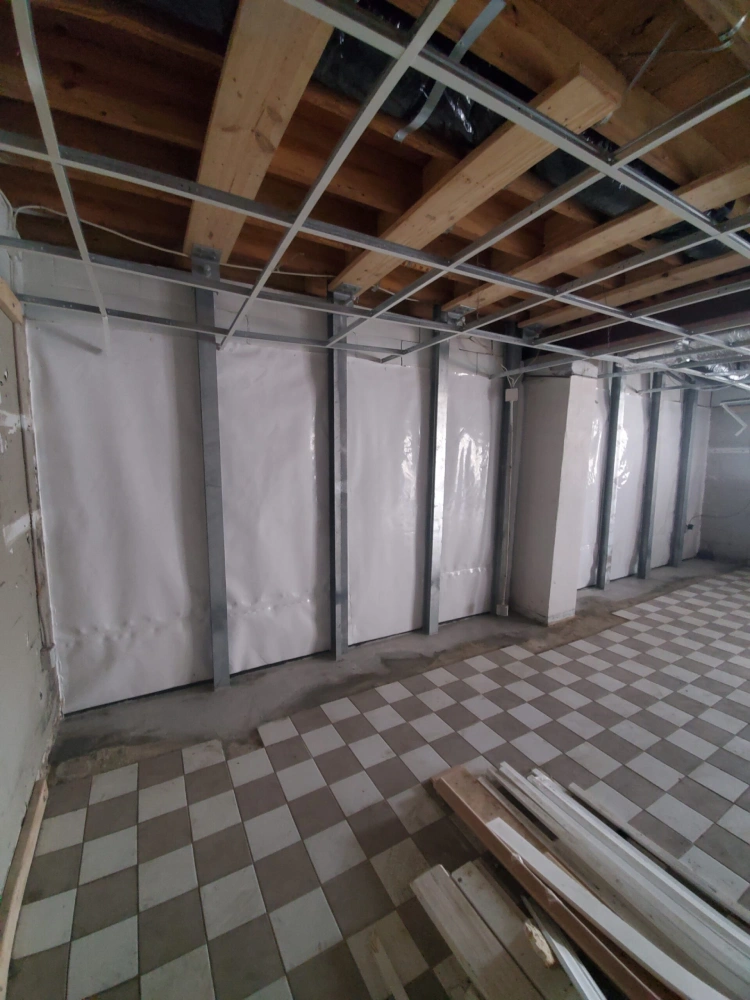
Vapor Barriers
: Materials that limit moisture diffusion through walls and floors, reducing humidity levels.
Drainage Boards
: Panels that create channels for water to flow downward into drainage systems, reducing pressure buildup.
A robust waterproofing strategy often integrates several of these systems to address both prevention and water management.
Early Warning Signs of Basement Moisture Problems
What to Watch For
- Persistent musty odors
- Visible cracks in walls or floors
- Water stains or discoloration
- Efflorescence (white mineral deposits)
- Peeling paint or bubbling finishes
- Damp spots or standing water after rain
These indicators suggest active moisture intrusion and should be evaluated promptly to prevent escalation.
Common Myth About Basement Waterproofing Debunked
Myth: “A Slightly Damp Basement Is Harmless”
This belief often leads homeowners to delay necessary improvements.
Reality:
Even minor dampness indicates uncontrolled moisture entering the structure. Over time, this can:
- Weaken foundational materials
- Encourage mold growth
- Reduce indoor air quality
- Lower property value
From a technical standpoint, a properly constructed and maintained basement should remain dry under normal conditions.
Why Experience Matters in Waterproofing
Effective waterproofing is not just about applying products; it requires accurate diagnosis and system design. Soil composition, grading, drainage patterns, and structural conditions all influence the appropriate solution.
As a family-owned and operated business, Tiger C Construction LLC has been providing quality services for over 20+ years. Their approach emphasizes identifying root causes rather than treating symptoms. This includes:
- Evaluating exterior drainage and grading
- Assessing foundation condition and material behavior
- Designing integrated systems tailored to each property
In a Richmond basement waterproofing project, repeated leaks were traced back to improper downspout discharge. Once corrected and paired with a perimeter drainage system, the issue was resolved permanently, demonstrating the value of comprehensive analysis.
Basement waterproofing works best when combined with proper exterior water management. Surface runoff, roof drainage, and exterior finishes all influence how water interacts with your home.
Long-Term Benefits of Basement Waterproofing
Short-Term vs. Long-Term Impact
| Benefit Area | Immediate Effect | Long-Term Outcome |
| Structural Health | Stops active leaks | Prevents major damage |
| Indoor Environment | Reduces humidity | Healthier living conditions |
| Financial Stability | Predictable investment | Avoids large repair costs |
| Property Value | Maintains condition | Enhances resale potential |
Homes with documented waterproofing systems often perform better during inspections and attract more confident buyers.
What to Expect During the Waterproofing Process
Step-by-Step Overview
- Inspection
A thorough evaluation of foundation walls, floors, and exterior drainage conditions - Moisture Detection
Use of tools to identify hidden moisture and map water entry points - System Design
Development of a customized plan based on structural and environmental factors - Installation
Implementation of drainage systems, sealants, and protective barriers - Testing
Verification of system performance under controlled conditions - Maintenance Guidance
Recommendations for ensuring long-term effectiveness
In Summary: A Smart Investment in Long-Term Protection
Basement waterproofing is a proactive strategy that protects your home from structural damage, health risks, and escalating repair costs. Addressing moisture issues early ensures a stable, dry, and energy-efficient environment.
If you’re looking for a reliable solution backed by real-world experience, contact us today at Tiger C Construction, LLC. Their team delivers customized waterproofing systems designed to solve the root cause of moisture problems, helping you protect your home for years to come.
People Also Ask (FAQ)
How much does basement waterproofing typically cost?
Costs vary depending on the severity of the issue and the systems required, but preventative solutions are significantly more affordable than major structural repairs.
How long does waterproofing last?
Professionally installed systems can last decades when properly maintained.
Can waterproofing fix existing foundation cracks?
Yes. Many systems include crack repair techniques such as injection sealing.
Is interior waterproofing enough?
Interior systems manage water after entry, while exterior systems prevent it. Combining both provides the most reliable protection.
Will waterproofing stop mold growth completely?
By eliminating moisture, waterproofing removes the primary condition required for mold growth.