
Replacing rotten wood in a house can cost from a few hundred dollars for a small repair to several thousand dollars when extensive or structural damage is involved. The final cost depends on the amount of wood affected, its location, accessibility, the cause of the rot, and whether surrounding materials also require repair.
What Determines The Cost Of Rotten Wood Replacement
There is no universal price for replacing rotten wood because every property has different conditions. A contractor must consider the severity of deterioration, the type of lumber involved, and how difficult it will be to access the affected area.
Several factors can influence the overall cost:
- Amount of damage: More extensive deterioration requires additional materials and labor.
- Location: Wood in an accessible exterior area is generally easier to replace than framing inside a confined crawl space.
- Structural importance: Decorative trim and load-bearing framing require very different repair approaches.
- Accessibility: Tight crawl spaces or enclosed areas can increase labor requirements.
- Moisture source: Leaks, drainage problems, groundwater, or excessive humidity may require correction.
- Finishing work: Siding, drywall, trim, or paint may need to be restored after the damaged wood is removed.
This is why an inspection is more useful than relying on a single online price.
What Are Typical Rotten Wood Replacement Costs
Small localized repairs may cost several hundred dollars, while moderate projects can reach several thousand dollars. Extensive deterioration involving structural framing in multiple areas or moisture-related repairs can cost considerably more.
| Repair condition | General cost expectation |
| Small localized deterioration | Hundreds of dollars |
| Several damaged sections | Hundreds to several thousand dollars |
| Structural wood replacement | Several thousand dollars or more |
| Extensive structural and moisture damage | Potentially much higher |
These ranges are only budgeting guidelines. Local labor rates, material costs, accessibility, and the amount of hidden damage can significantly affect the final price.
Homeowners comparing rotten wood replacement in Richmond services should therefore focus on the scope of work included in each estimate rather than comparing totals alone.
Which Parts Of A House Can Cost More To Repair
The location of rotten wood can significantly affect a project’s complexity.
Crawl Space Framing
Crawl spaces may contain floor joists, beams, sill plates, and other structural components. Persistent moisture can contribute to deterioration in these areas, making inspection particularly important.
Replacing wood inside a crawl space can also require additional labor because the work area may be confined and difficult to access.
Sill Plates And Structural Members
A deteriorated sill plate, beam, or floor joist can be more complicated than replacing nonstructural trim. Depending on the condition, temporary support may be necessary before damaged material can be removed.
Exterior Wood
Rot can develop around windows, doors, fascia, soffits, siding, and other exterior components. These repairs may involve removing surrounding materials before the affected section can be properly replaced.
Subflooring
When moisture reaches subflooring, the damage may extend beyond the surface. A professional must determine whether the deterioration affects only the subfloor or also involves supporting framing underneath.
What Does Rotten Wood Replacement Involve
Professional wood replacement should address the damaged material and investigate the cause of the deterioration.
Inspection: The affected area is examined to determine the extent of the damage.
Moisture assessment: The source of moisture is identified whenever possible.
Removal: Severely deteriorated material is removed while protecting surrounding components.
Replacement or reinforcement: Suitable materials are installed, or structurally sound sections are reinforced when appropriate.
Moisture control: Necessary measures may include drainage improvements, waterproofing, or crawl space moisture management.
Restoration: Exterior or interior finishes may need repair after the structural work is complete.
A homeowner in The Fan may discover deteriorated exterior wood around an older property, while another home in Church Hill may experience moisture-related deterioration in a crawl space. In either situation, the visible damage does not necessarily indicate the full scope of the problem.
How Can You Tell If Rotten Wood Needs Replacement
Wood rot is not always obvious from a quick visual inspection. Some deterioration can occur underneath surfaces or in areas that are difficult to see.
Potential warning signs include:
- Soft or spongy wood
- Crumbling or weakened lumber
- Dark or discolored areas
- Persistent musty odors
- Damp crawl space framing
- Uneven or bouncing floors
- Settlement-related cracks
- Doors or windows that become difficult to operate
- Recurring moisture around a damaged area
These symptoms do not automatically mean that structural wood has failed. However, they justify a closer inspection to determine what is happening behind the visible surface.
Should Rotten Wood Be Repaired Or Replaced
The correct approach depends on how much deterioration has occurred.
| Wood condition | Possible approach |
| Minor surface damage | Repair may be possible |
| Limited deterioration | Targeted repair may be appropriate |
| Deeply decayed wood | Replacement is generally needed |
| Compromised structural lumber | Professional replacement or reinforcement |
| Recurring rot | Address the moisture source first |
Trying to preserve severely deteriorated wood simply to reduce the initial price can create problems later. If the material has lost significant strength, replacing it may be necessary to restore the affected area properly.
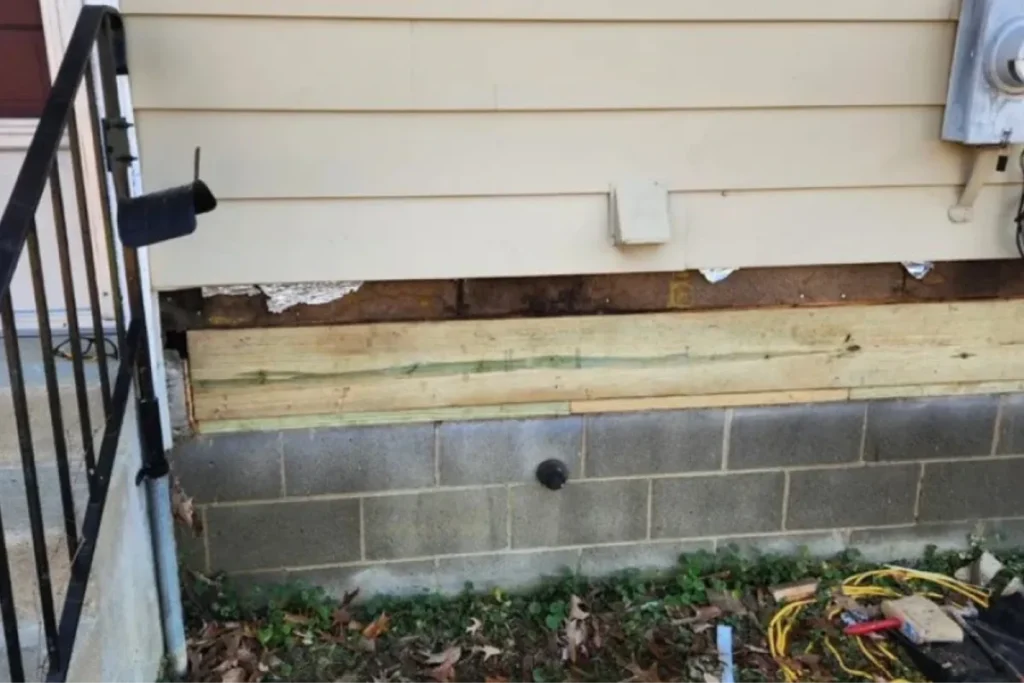
Misconception: Can You Just Paint Over Rotten Wood
Painting over rotten wood does not restore deteriorated lumber or eliminate the moisture problem causing the damage. Paint can improve the appearance of a surface, but it cannot return structural strength to wood that has already decayed.
A proper repair requires determining how far the deterioration extends and whether moisture is still reaching the affected area.
This distinction matters when evaluating Richmond, VA rotten wood replacement because treating only the visible symptom may allow the underlying problem to continue.
How Does Moisture Increase Repair Costs
Moisture is one of the most important factors to consider when wood begins to deteriorate. Common contributors include plumbing leaks, roof leaks, poor drainage, groundwater intrusion, and excessive humidity.
If the moisture source remains unresolved, newly installed wood may eventually experience the same conditions.
For example, replacing damaged crawl space framing without addressing persistent moisture can leave the new material vulnerable. Depending on the situation, the broader project may therefore involve drainage improvements, waterproofing, or other moisture-control measures.
This is one reason Richmond rotten wood replacement projects should be evaluated as more than simple carpentry repairs.
What Should A Rotten Wood Replacement Estimate Include
A detailed estimate should explain what the contractor found and what work is being recommended.
Before approving a project, homeowners should look for:
- Areas where deterioration was identified
- Proposed replacement or reinforcement work
- Materials to be installed
- Labor requirements
- Access or demolition requirements
- Moisture-related recommendations
- Disposal and cleanup
- Finishing work, when applicable
A clear scope helps homeowners understand why estimates differ and whether the proposed work addresses the actual problem.
For a property in Carytown, for example, replacing a small section of exterior trim would involve a very different scope from replacing damaged structural framing. Comparing those projects solely by price would not provide a meaningful comparison.
Why Should Rotten Wood Be Addressed Early
Wood deterioration can become more complicated when moisture exposure continues. A problem that initially affects one section may eventually involve adjacent materials or structural components.
Early attention can help determine whether the damage is isolated or connected to a larger moisture issue.
The goal is not necessarily to replace more material than necessary. Instead, the objective should be to accurately identify the affected area, determine the cause, and complete the appropriate repair.
Protect Your Home With The Right Repair
The cost of replacing rotten wood depends on the extent of deterioration, location, accessibility, structural importance, and underlying moisture conditions. Rather than choosing a contractor based solely on the lowest price, homeowners should seek an evaluation that explains the cause of the damage and what needs to be repaired.
Tiger C Construction, LLC provides construction and home improvement solutions designed to address problems affecting residential properties. Its approach focuses on evaluating the home’s condition and developing an appropriate solution tailored to the property’s needs.
If you suspect rotten or deteriorated wood in your home, contact us to discuss your concerns and determine the appropriate next step. Addressing damaged wood early can help protect your home’s structure and prevent a manageable issue from becoming a more extensive repair.
People Also Ask
How much does it cost to replace rotten wood in a house?
The cost varies according to the size, location, accessibility, and severity of the damage. Small repairs may cost hundreds of dollars, while structural projects can reach several thousand dollars or more.
Is it better to repair or replace rotten wood?
Minor deterioration may be repairable, but severely weakened or structurally compromised wood generally requires replacement or reinforcement. An inspection can determine which approach is appropriate.
What causes wood to rot inside a house?
Persistent moisture is a major cause. Leaks, poor drainage, groundwater, excessive humidity, and moisture intrusion around crawl spaces can all contribute to wood deterioration.
How can I get an accurate estimate for a rotten wood replacement?
A professional inspection is the best starting point. The contractor should evaluate the visible damage, investigate surrounding materials, identify potential moisture sources, and provide a clear scope of recommended work.