
A vapor barrier is a plastic sheet laid over the dirt floor of a crawl space to slow moisture from the ground. Encapsulation seals the floor, foundation walls, and openings to outside air, then uses a dehumidifier to keep the whole space dry year-round. In Central Virginia’s humid climate, that extra step is often what keeps a crawl space dry instead of damp. This question comes up often during crawl space inspections in the greater Richmond area. Many homes already have some plastic on the ground. Homeowners want to know whether that plastic is enough or whether full encapsulation is worth it. This guide covers what each option does, where each one falls short, and how to tell which one a home needs.
What a Vapor Barrier Does
A basic vapor barrier is a sheet of polyethylene placed over the exposed soil. Soil gives off moisture all the time, even when it looks dry. The sheet slows that moisture before it rises into the crawl space air.
A vapor barrier helps with:
- Ground moisture evaporating from bare soil
- Keeping the crawl space floor cleaner for plumbing, HVAC, and pest service visits
- Reducing part of the moisture load on wood framing
What a vapor barrier does not handle on its own:
- Humid outdoor air coming in through open foundation vents
- Water that runs into the crawl space during heavy rain
- Moisture coming through the foundation walls
- Gaps at seams and edges where the sheet is loose or torn
Many of the vapor barriers we find in older Richmond-area homes are thin, loose, and torn in spots. Seams are not taped. Edges stop short of the walls. Pipes and piers poke through with no seal around them. In that condition, the plastic does very little to protect the space.
What Crawl Space Encapsulation Includes
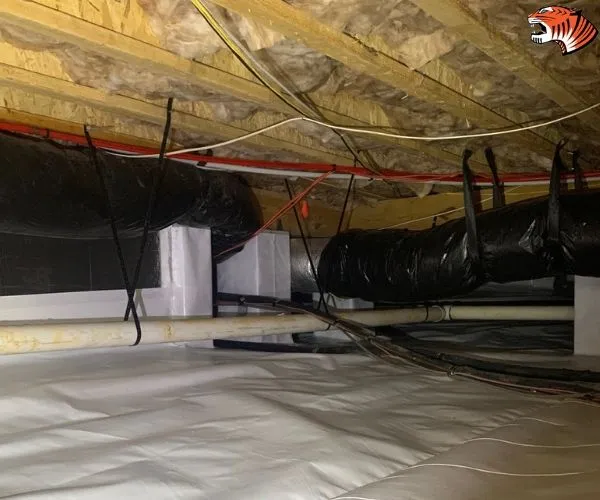
Encapsulation treats the crawl space as part of the home instead of an outdoor space under the floor. When we encapsulate a crawl space, the system includes:
- Sealing the entire ground surface with a heavy-duty vapor barrier
- Running the liner up and sealing it to the perimeter foundation walls
- Sealing seams and openings so outside air and ground moisture stay out
- Installing a dehumidification unit to keep humidity under control
Depending on what the inspection finds, insulation and water management may be part of the plan too. If water is coming into the space, it needs a drainage solution before investing in crawl space encapsulation in Richmond, VA. Sealing a wet crawl space without fixing the water source traps the problem underneath the liner.
Side-by-Side Comparison
| Factor | Basic Vapor Barrier | Full Encapsulation |
|---|---|---|
| Ground moisture | Slows it | Seals it off |
| Foundation walls | Not covered | Lined and sealed |
| Outside air through vents | Still enters | Blocked |
| Humidity control | None | Dehumidifier keeps levels in check |
| Standing water | Not addressed | Paired with drainage when needed |
| Best fit | Dry crawl spaces with healthy humidity | Humid, damp, or musty crawl spaces |
Why Humidity Matters So Much in Central Virginia
Richmond summers are hot and humid. When warm, moist air flows through open crawl space vents, it meets cooler surfaces like ducts, pipes, and floor joists. That air leaves its moisture behind as condensation. Wood that stays damp becomes a target for mold and rot.
Any crawl space that sits at 65% relative humidity or higher is at risk of mold growth. Virginia air is humid for much of the year, so most vented crawl spaces in our area reach that level for long stretches. A plastic sheet on the ground does nothing about the moisture already in the air. That is the main reason crawl space encapsulation in Richmond includes a dehumidifier.
Some of the air in a home also rises up from the crawl space. When that space is damp and musty, the smell and moisture can reach the living areas above. Homeowners often notice it first as a musty odor in the rooms over the crawl space.
Signs a Vapor Barrier Is Not Enough
A vapor barrier alone may be fine in a crawl space that stays dry. These signs point to a moisture problem that a sheet of plastic will not solve:
- Musty odors in the home, especially in rooms above the crawl space
- Condensation on ducts, pipes, or the underside of the floor
- Mold or mildew on joists or the subfloor
- Wood that looks dark, feels soft, or shows signs of rot
- Standing water or water stains on the ground or the plastic
- Sagging or bouncy floors above the crawl space
- Insects or animals getting into the space
- Indoor humidity that feels high even with the air conditioning running
When we see two or three of these together, the crawl space usually needs more than a new sheet of plastic.
When a Vapor Barrier Can Be the Right Call
Not every crawl space needs full encapsulation. A vapor barrier may be enough when:
- The crawl space stays dry through wet seasons
- Humidity readings are already at safe levels
- There is no sign of mold, rot, or condensation
- The goal is to replace a torn or missing ground cover in an otherwise healthy space
We give homeowners an honest answer here. If a crawl space only needs a better ground cover, we say so and explain why.
What to Fix Before Encapsulating
Encapsulation works best on a crawl space that is ready for it. Professional installers evaluate several core components when preparing a house for Richmond crawl space encapsulation. Before we seal a space, we look at four things:
- Water entry. Water that comes through or under the foundation, or from poor grading outside, needs a drainage plan first. That can mean a perimeter drain and sump pump inside the crawl space, or an exterior solution like a French drain or regrading.
- Damaged wood. Rotten joists, sill plates, band boards, or beams should be replaced or sistered before the space is sealed.
- Settling floors. If posts or supports have failed, new floor supports go in before the liner covers the ground.
- Debris and old materials. Old plastic, fallen insulation, and debris come out so the new liner can be installed properly.
Skipping these steps leads to problems later. A sealed crawl space with an active leak or rotten framing will not perform the way it should.
How Long Each Option Lasts
A thin, loose vapor barrier tends to tear as people move through the space for plumbing, HVAC, or pest service. Once it tears, ground moisture comes back through the gaps.
A heavy-duty liner that is sealed to the walls holds up better because it is anchored in place and less likely to shift. The dehumidifier is a mechanical unit, so it needs basic upkeep like any other appliance in the home. Homeowners should ask about the unit’s maintenance needs during the project, so they know what to expect after the work is done.
Cost Factors to Expect
Every crawl space is different, so the cost depends on what the space needs. The main factors are:
- The square footage of the crawl space
- Height and access, since low or tight spaces take longer to work in
- Whether water management or drainage is needed first
- Whether damaged wood or floor supports need repair
- The dehumidifier and any insulation included in the plan
We provide a free estimate with a detailed cost breakdown, so it is clear what each part of the work covers. Financing options are also available for larger projects.
Frequently Asked Questions
Is a vapor barrier the same as encapsulation?
No. A vapor barrier covers the ground. Encapsulation seals the ground, walls, and openings, and adds humidity control with a dehumidifier.
Can a homeowner add a vapor barrier now and encapsulate later?
Yes. Some homeowners start with a new ground cover and add wall sealing and a dehumidifier later. We can plan the work in phases if that fits the budget better.
Does encapsulation stop mold?
Encapsulation controls the moisture mold needs to grow. Existing mold should be addressed as part of the project, and the dehumidifier keeps humidity low enough to discourage new growth.
Should crawl space vents be sealed?
In a fully encapsulated crawl space, the vents are sealed to keep humid outdoor air out. In a crawl space with only a ground cover, the vents are usually left as they are.
Can encapsulation help with energy bills?
It can. A sealed, dry crawl space does not swing as hot or as cold as the outdoors, which can help the floors and ductwork above stay closer to indoor temperature.
Get a Free Crawl Space Inspection in the Richmond Area
A torn liner, a musty smell, or signs of moisture are good reasons to have the crawl space checked. Tiger C Construction, LLC will measure humidity, look for water entry and wood damage, and explain whether a vapor barrier or full encapsulation makes sense for the home.
Contact us today or request a free estimate.