
Basement waterproofing saves your home by creating a comprehensive barrier against groundwater intrusion, preventing structural decay, hazardous mold growth, and foundation erosion. By managing hydrostatic pressure through interior drainage and exterior sealants, you preserve your property’s equity and ensure a dry, safe living environment for years to come.
The Hidden Threat: Understanding Hydrostatic Pressure
To understand why your basement leaks, you must first understand the physics of the soil surrounding your home. Water is heavy, weighing approximately 62.4 pounds per cubic foot. When heavy rains saturate the ground, the soil expands, creating “hydrostatic pressure.” This force pushes against your foundation walls with incredible intensity.
Without professional basement waterproofing in Richmond, VA, this pressure finds the path of least resistance. It forces water through microscopic fissures in the concrete, expansion joints, and the “cove joint”, the point where your basement floor meets the wall. Over time, this pressure doesn’t just cause leaks; it can cause walls to bow or even collapse.
During a recent structural audit for a firm in the Museum District, our team identified advanced efflorescence, the white, crystalline salt deposits left behind when water evaporates. This isn’t just an aesthetic issue; it indicates that minerals are being leached from the concrete, leading to “spalling” (surface peeling) and eventual structural compromise.
Comprehensive Waterproofing Specifications
A professional waterproofing strategy is not a single product, but a system of integrated components designed to manage water flow. Here are the technical specifications of a high-performance system:
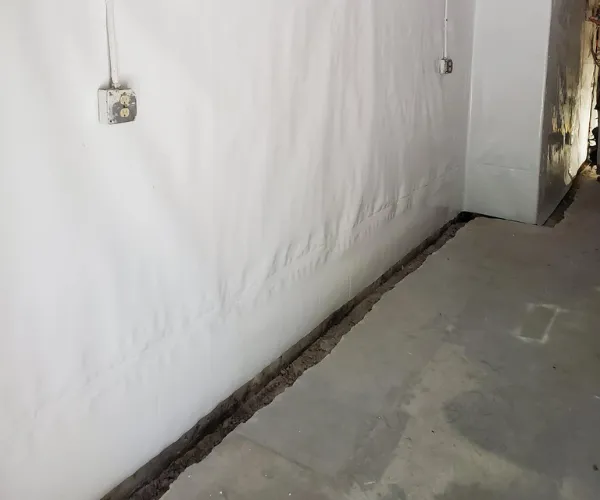
- Vapor Barrier (Class I): A high-density polyethylene (HDPE) membrane installed on interior walls to prevent moisture vapor from migrating into the living space.
- Sub-Floor Perforated Drainage (French Drain): A system installed at the footing level to collect groundwater before it reaches the floor surface.
- Dual Sump Pump Systems: Redundant mechanical pumps equipped with battery backups to ensure continuous operation during power outages or primary pump failure.
- Industrial Dehumidification: Systems designed to maintain relative humidity (RH) below 50%, effectively inhibiting the growth of Stachybotrys chartarum (black mold).
- Elastomeric Exterior Membranes: Rubberized coatings applied to the external foundation wall to provide a seamless, flexible barrier against liquid water.
- Grate Drains: Specialized drainage points installed at the base of basement stairs or garage entrances to catch surface runoff.
Debunking the Myth: “Waterproof Paint is a Permanent Solution”
A common industry misconception is that a DIY application of “waterproof” masonry paint can resolve a leaking basement.
The Reality: These coatings are superficial vapor retarders, not structural solutions. They are designed to stop “dampness,” not pressurized water. When hydrostatic pressure builds up outside your home, it will eventually cause the paint to bubble, crack, and delaminate.
Even worse, these paints can trap moisture inside the concrete block. In Virginia’s climate, where freeze-thaw cycles occur, trapped water can freeze within the masonry, causing it to crack from the inside out. Effective basement waterproofing in Richmond requires managing the water table and relieving the pressure, rather than merely painting over the symptoms.
The Long-Term Consequences of Basement Neglect
Ignoring a damp basement is a gamble with your home’s longevity. Water is the “universal solvent,” and its presence leads to several destructive outcomes:
1. Structural Stabilization and Masonry Decay
Constant exposure to moisture causes concrete to lose its compressive strength. In historic areas like The Fan, we frequently see where a lack of proper drainage has caused perimeter footings to settle or “sink” unevenly. This “differential settlement” leads to cracked drywall in the upper floors, sticking doors, and compromised floor joists. Waterproofing stops this erosion process before it requires expensive foundation piers.
2. The “Stack Effect” and Your Health
Your home acts like a giant chimney. Warm air rises and escapes through the attic, creating a vacuum that pulls air from the basement upward into your primary living areas. This is known as the “stack effect.” If your basement is damp, your HVAC system is circulating mold spores, dust mites, and microbial volatile organic compounds (mVOCs). High-quality Richmond, VA basement waterproofing breaks this cycle, ensuring the air your family breathes is clean and dry.
3. Electrical and Mechanical Risks
Basements typically house your home’s most expensive infrastructure: furnaces, water heaters, and electrical panels. High humidity levels accelerate the corrosion of copper wiring and the rusting of steel tank bases. By controlling the climate through waterproofing, you extend the lifespan of these critical systems.
System Comparison Table: Methods of Protection
| Feature | Topical Sealants | Interior Drainage Systems | Exterior Excavation |
| Primary Mechanism | Surface Barrier | Pressure Relief & Redirection | Source Exclusion |
| Durability | 1–3 Years | Lifetime of the Structure | 20+ Years |
| Installation Impact | Minimal | Controlled Interior Work | Significant Exterior Digging |
| Reliability | Low | Very High | High |
| Typical Cost | $ | $$ | $$$ |
Critical Indicators: When to Call a Specialist
If you reside in neighborhoods with aging infrastructure and clay-rich soil, such as Church Hill, your foundation is likely already under significant stress. Watch for these red flags that indicate your home’s “envelope” has been breached:
- Musty Odors: This is often the first sign of mold growth hidden behind drywall or under flooring.
- Horizontal Cracking: A sign that hydrostatic pressure is causing the wall to bow inward, this is a structural emergency.
- Floor-Wall Seepage: Water appearing at the “cove joint” indicates the water table has risen above your floor level.
- Rust on Nails or Carpet Tack Strips: Evidence of high ambient humidity, even if no liquid water is visible.
- Peeling Floor Paint: Evidence that moisture vapor is pushing up through the concrete slab.
Securing a reliable Richmond basement waterproofing specialist at the first sign of these symptoms can save you tens of thousands in emergency foundation repairs and mold remediation later.
The Tiger C Construction Advantage: Our 4-Step Process
At Tiger C Construction, LLC, our process is rooted in two decades of masonry and drainage expertise. We don’t believe in “one size fits all” patches.
- Hydrological Assessment: We don’t just look at the leak; we look at the landscape. We analyze gutters, downspouts, and soil grading to find out why the water is there in the first place.
- Engineered Drainage: We install a “path of least resistance.” By installing a sub-floor drainage track, we give the water a place to go, which instantly relieves the pressure on your walls.
- Active Discharge: A drain is only as good as its exit. We ensure water is moved through a high-volume sump system and discharged at least 10-20 feet away from the foundation.
- Climate Calibration: Once the liquid water is gone, we address the air. We offer professional-grade dehumidification to ensure the space remains “hospital-grade” dry.
Protect Your Foundation with Tiger C Construction
Your home is your most valuable asset, and the foundation is the most critical part of that asset. Don’t wait for the next heavy Virginia storm cycle to compromise your family’s safety and comfort. With over 20 years of proven expertise, Tiger C Construction, LLC offers the technical precision and local experience necessary to keep your basement bone-dry.
We take pride in our reputation as a family-owned business that treats every home as if it were our own. From the first inspection to the final pump test, we are committed to excellence and transparency.
Contact us today for a professional site evaluation. Let us help you safeguard your home’s structural integrity, improve your air quality, and provide the peace of mind that comes with a dry, protected basement.
People Also Ask (FAQ)
Is basement waterproofing worth the investment?
Absolutely. The ROI (Return on Investment) is measured in both home value and cost avoidance. The cost of a waterproofing system is a fraction of the cost of foundation collapse or a total mold gut-renovation.
How long does a waterproofing system last?
Our interior drainage systems are engineered for the life of the home. Because they are protected from the sun and extreme temperature swings by being under the floor, the PVC components do not degrade.
Can I waterproof my basement from the inside?
Yes. Interior “sub-floor” waterproofing is the gold standard for existing homes. It is less destructive than digging up your yard and allows for a more controlled management of groundwater.
Does homeowners’ insurance cover groundwater flooding?
Standard policies almost always exclude “seepage” or slow groundwater intrusion. They may cover a burst pipe, but they will not cover a leaky foundation wall unless you have a specific (and expensive) flood insurance rider.